So you just found out you might be pregnant — or you’re in the middle of trying to conceive — and you’re looking up everything about 1 week pregnant.
Here’s something that surprises almost every mom: when you’re 1 week pregnant, you’re actually not pregnant yet. And that’s completely normal. It’s one of the most confusing parts of pregnancy counting — but once you understand it, everything makes sense.
At Babyslover, we’re walking you through 1 week pregnant in detail — what’s really happening inside your body right now, what symptoms are normal, what to do this week, and how to set yourself up for the healthiest pregnancy possible. If you’re a first-time mom, our pregnancy tips for first time moms guide is a great place to read next.
| 📋 Quick Summary — Week 1 of Pregnancy | |
| Week | Week 1 of 40 |
| Trimester | First Trimester |
| What’s happening | Your period. Body is shedding last cycle’s lining & preparing for ovulation. |
| Baby size | No baby yet — conception hasn’t happened. |
| Symptoms | Period cramps, bleeding, bloating, mood swings, fatigue |
| Top priority | Start prenatal vitamins with folic acid TODAY |
Contents
- 1 Wait — Am I Actually Pregnant at 1 Week?
- 2 What’s Actually Happening in Your Body at 1 Week Pregnant
- 3 🌱 Baby Development at 1 Week Pregnant
- 4 1 Week Pregnant Symptoms — What’s Normal
- 5 What to Do When You’re 1 Week Pregnant — Preconception Tips
- 6 For Your Partner — What Dad Can Do at 1 Week
- 7 Your Week 1 Pregnancy Checklist — This Week Ka To-Do List
- 8 When to Call Your Doctor at 1 Week Pregnant
- 9 What to Eat at 1 Week Pregnant
- 10 Frequently Asked Questions — 1 Week Pregnant
- 11 👶 What Happens Next — 2 Weeks Pregnant Preview
- 12 You’re at the Very Beginning — And That’s Exciting
Wait — Am I Actually Pregnant at 1 Week?
Here’s the truth that confuses almost everyone: when doctors say 1 week pregnant, you haven’t actually conceived yet.
Pregnancy is counted from the first day of your last menstrual period (LMP) — not from the day of conception. This is standard medical practice used worldwide because most women remember when their period started, but very few know exactly when they ovulated or conceived.
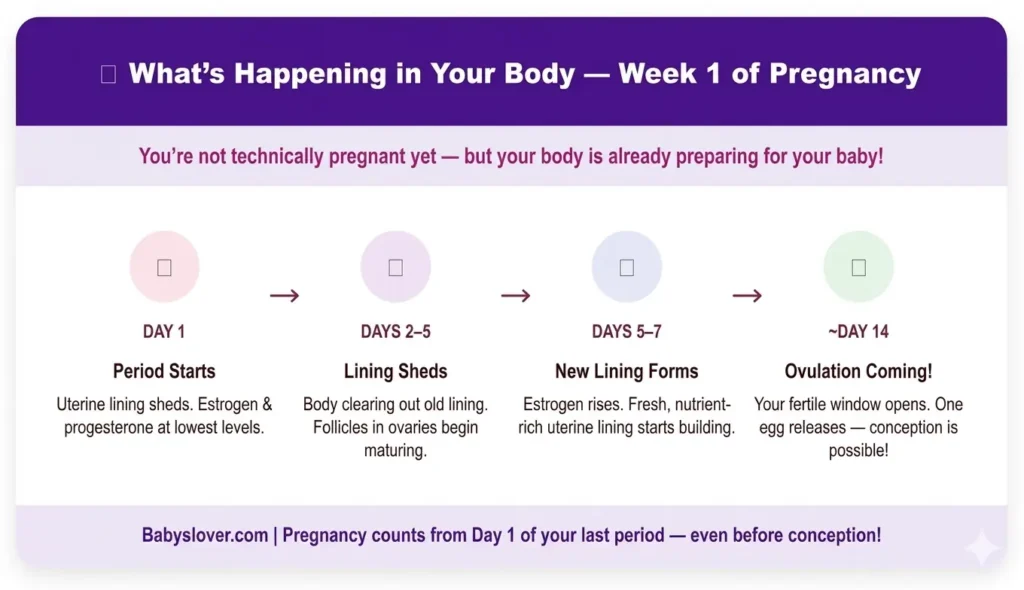
So when you’re 1 week pregnant by the LMP method, you’re actually just having your period. Your body is shedding the uterine lining from last month and preparing itself for a new cycle. Ovulation — and the actual chance to conceive — won’t happen until around Week 2.
💡 A full pregnancy is 40 weeks. But the first 2 of those weeks happen BEFORE conception. Your actual due date is calculated by adding 280 days from the first day of your last period.
What’s Actually Happening in Your Body at 1 Week Pregnant
Even though there’s no baby yet, your body is absolutely not doing nothing. Week 1 is a highly active preparation phase.
Your Uterine Lining Is Shedding
Your uterus is releasing the lining it built up in the previous cycle — this is your period. The lining was prepared just in case a fertilized egg needed a cozy place to implant. Since that didn’t happen last cycle, the body lets it go and starts fresh.
Hormones Are Shifting
At the very start of Week 1, estrogen and progesterone levels are at their lowest. This drop is what triggers your period. Over the course of the week, estrogen slowly starts rising again as your body prepares follicles in your ovaries for the next ovulation.
Your Eggs Are Getting Ready
Inside your ovaries, several follicles (tiny fluid-filled sacs that each contain an egg) are beginning to mature. By around Day 14 of your cycle, one of these follicles will release a dominant egg — that’s ovulation, and that’s your fertile window.
Your Body Is Building a Fresh Lining
Even as the old lining sheds, your body begins building a brand new, thick, nutrient-rich uterine lining. If conception happens later in the cycle, this new lining is what an embryo will implant into. Your body is already laying the groundwork.
🌱 Baby Development at 1 Week Pregnant
Here’s a question almost every mom asks first: what does my baby look like right now?
The honest answer at 1 week pregnant: there is no baby yet — and that’s completely okay. You haven’t ovulated, and fertilization hasn’t occurred. But your body is doing important groundwork that will directly support your baby’s development the moment conception happens.
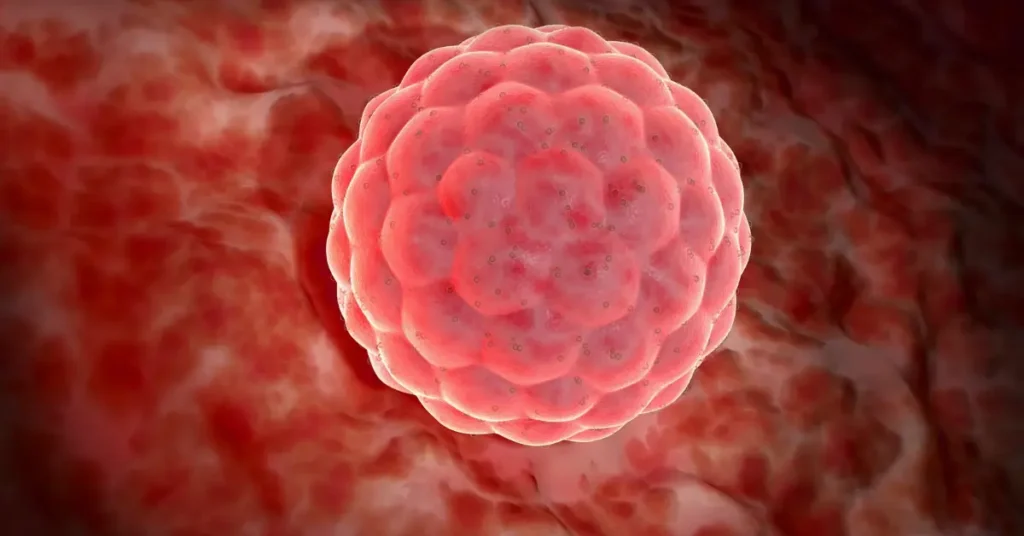
| 🌱 Baby Development at 1 Week Pregnant | |
| Baby Size | No embryo yet — preconception stage |
| Fruit Comparison | — (no fruit comparison yet) |
| Weight | Not applicable |
| Week / Trimester | Week 1 of 40 • First Trimester |
| Stage | Preconception — Body preparing for ovulation |
What Is Actually Developing at Week 1?
Even without a baby present, Week 1 is a critical development stage for your eggs and uterine environment:
- Egg follicles maturing: Inside your ovaries, several follicles (each containing a potential egg) are beginning to grow and mature under the influence of FSH — follicle stimulating hormone. One will become dominant and release an egg during ovulation next week.
- Uterine lining rebuilding: As your period ends, your uterus starts building a fresh, thick, nutrient-rich lining. If fertilization occurs later this cycle, this is the lining the embryo will implant into — it needs to be healthy and well-nourished.
- Estrogen rising: Your ovaries begin producing increasing amounts of estrogen, which stimulates both follicle development and uterine lining growth. This hormonal rise is the engine behind everything happening this week.
- Cervical mucus changing: Your cervix begins producing mucus that will gradually become more receptive to sperm as ovulation approaches. By Week 2, it will shift to the stretchy, egg-white consistency that helps sperm travel.
- Your egg’s genetic material is ready: The egg that will potentially be fertilized this cycle already contains half of your baby’s DNA — 23 chromosomes that have been waiting since before you were born. When sperm provides the other 23, your baby’s complete genetic blueprint is set.
1 Week Pregnant Symptoms — What’s Normal
The 1 week pregnant symptoms you experience are actually your period symptoms — because technically, that’s what’s happening. Here’s what’s normal:
- Menstrual bleeding: Light to moderate bleeding that may start heavy and taper off over 3–7 days. Color can range from bright red to dark brown.
- Cramping: Your uterus contracts to help shed the lining. Mild to moderate cramps in the lower abdomen and lower back are completely normal at 1 week.
- Bloating: Hormonal changes slow digestion slightly, which can cause a bloated, heavy feeling in your belly.
- Mood swings: The drop in estrogen and progesterone at the start of your period can trigger irritability, sadness, or emotional sensitivity.
- Fatigue: Blood loss and hormonal shifts can leave you feeling more tired than usual during your period.
- Breast tenderness: Sore or heavy breasts from hormonal fluctuations. This usually eases as the week goes on.
- Headaches: Another common period symptom driven by changing hormone levels.
💡 No pregnancy symptoms at 1 week pregnant is completely normal — because you’re not actually pregnant yet! Real pregnancy symptoms (nausea, missed period, sore breasts from conception) won’t show up until around 4–6 weeks.
What to Do When You’re 1 Week Pregnant — Preconception Tips
If you’re trying to conceive, week 1 of pregnancy is actually the best possible time to start building healthy habits. Everything you do now — before conception even happens — can have a real impact on your baby’s development from day one.
🌿 Start Taking Prenatal Vitamins Today
This is the single most important thing you can do at 1 week pregnant or earlier. Folic acid — found in prenatal vitamins — helps prevent neural tube defects in your baby’s brain and spine. The neural tube forms in the very first weeks of pregnancy, often before you even know you’re pregnant.
The CDC recommends 400 mcg of folic acid daily for all women who could become pregnant. Check out our guide to the best prenatal vitamins to find one that works for you.
📅 Track Your Menstrual Cycle
If you want to conceive, knowing your cycle is everything. A typical cycle is 28 days, with ovulation around Day 14. But cycles vary widely. Tracking with an app (Flo, Ovia, or Clue) helps you identify your most fertile days — so you’re ready when the window opens.
🍽️ Start Eating for Conception
Your diet at 1 week pregnant matters even though there’s no baby yet. Focus on folate-rich foods: leafy greens (spinach, kale), lentils, beans, avocado, and fortified cereals. Also load up on iron (red meat, tofu, spinach), calcium (dairy, almonds), and omega-3s (salmon, walnuts, flaxseed).
🚫 Cut Out Alcohol and Smoking
There is no known safe level of alcohol during pregnancy, and since you may not know you’re pregnant for several weeks after conception, stopping now is the smartest move. Same goes for smoking — both active smoking and secondhand smoke reduce fertility and increase miscarriage risk. According to ACOG guidelines, preconception care should always include stopping alcohol and tobacco.
☕ Limit Caffeine
Moderate caffeine is considered safe during pregnancy (under 200mg/day), but since Week 1 is your preconception window, cutting back now is a good idea. One cup of coffee a day is generally fine — but energy drinks, sodas, and multiple coffees should go.
🏥 Schedule a Preconception Appointment
If you haven’t already, this week is a great time to book an appointment with your OB-GYN or midwife. A preconception visit can review your health history, check for any conditions that need to be managed before pregnancy, discuss your current medications, and update any vaccines you might need.
For Your Partner — What Dad Can Do at 1 Week
This section is for your partner — because the journey starts for both of you now, not just at the positive pregnancy test.
- Cut back on alcohol too: Alcohol affects sperm quality and DNA integrity. Ideally, men should reduce or eliminate alcohol for at least 3 months before conception, since sperm takes about 74 days to mature.
- Stop smoking: Secondhand smoke affects fertility and is harmful to pregnancy. This is the time to quit together.
- Eat well: A diet rich in zinc (found in meat, seeds, legumes) and folate supports healthy sperm production. Antioxidants from fruits and vegetables help protect sperm DNA.
- Reduce heat exposure: Prolonged hot baths, saunas, and tight underwear can temporarily reduce sperm count. Switch to boxers and skip the hot tub for a few months.
- Take a men’s fertility supplement: Many men take a daily supplement with zinc, CoQ10, and folic acid during the trying-to-conceive phase to support sperm health.
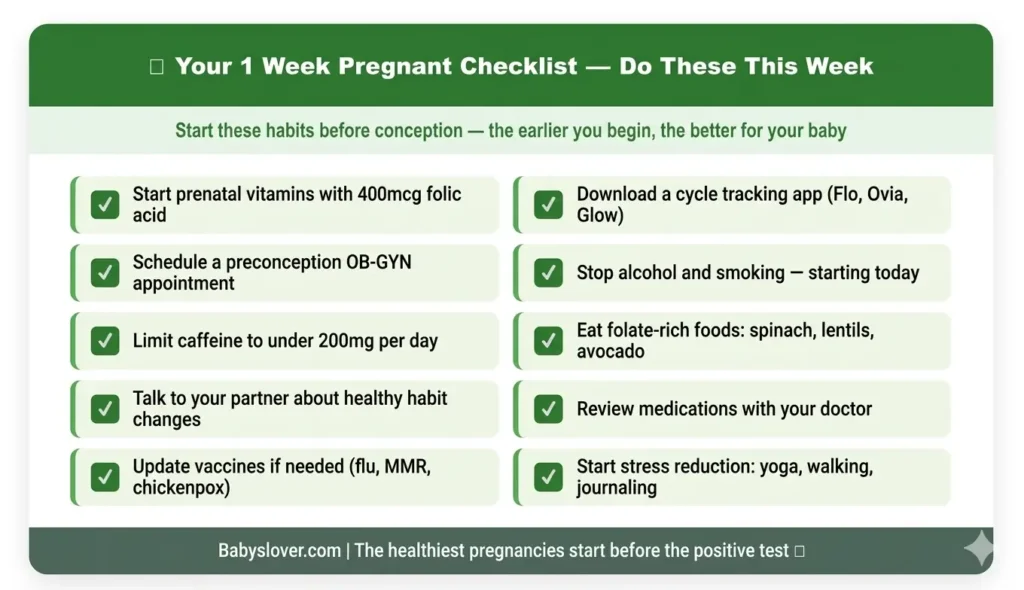
Your Week 1 Pregnancy Checklist — This Week Ka To-Do List
At 1 week pregnant, here’s exactly what to check off:
- ☑ Start taking prenatal vitamins with at least 400mcg folic acid
- ☑ Download a cycle tracking app (Flo, Ovia, Glow)
- ☑ Schedule a preconception appointment with your OB-GYN
- ☑ Stop drinking alcohol and smoking — starting today
- ☑ Limit caffeine to under 200mg/day
- ☑ Begin eating folate-rich foods: leafy greens, lentils, avocado
- ☑ Talk to your partner about lifestyle changes together
- ☑ Review any current medications with your doctor
- ☑ Update vaccines if needed (MMR, flu, chickenpox)
- ☑ Start stress reduction practices — yoga, walking, journaling
When to Call Your Doctor at 1 Week Pregnant
Most period symptoms at 1 week are completely normal. However, contact your doctor if you notice:
- Very heavy bleeding: Soaking more than one pad per hour for two or more hours in a row.
- Severe cramping: Pain that is significantly worse than your normal period pain, or pain on one side only.
- Fever over 101°F: A fever with your period can indicate infection.
- Unusual discharge: Discharge with a strong odor, unusual color, or irritation alongside your period.
- Signs of a possible ectopic pregnancy: If you think you may already be pregnant and experience sudden, sharp one-sided pain with bleeding, seek care immediately.
💡 If you’ve recently had a positive pregnancy test and are now bleeding, call your doctor right away — what looks like a period at week 1 could be early pregnancy bleeding that needs evaluation.
What to Eat at 1 Week Pregnant
Your plate during week 1 is setting the stage for conception and early development. Focus on:
| Nutrient | Why It Matters | Best Food Sources |
| Folic Acid | Prevents neural tube defects in early baby development | Spinach, lentils, avocado, oranges, fortified cereals |
| Iron | Supports blood production, reduces period fatigue | Lean red meat, tofu, spinach, pumpkin seeds |
| Calcium | Bone health for you and future baby | Dairy, fortified plant milk, almonds, broccoli |
| Omega-3 | Baby brain and eye development from conception | Salmon, sardines, walnuts, flaxseeds, chia seeds |
| Vitamin D | Supports fertility and immune function | Fortified milk, eggs, fatty fish, sunshine |
| Zinc | Hormone balance and cell growth | Beef, chickpeas, pumpkin seeds, cashews |
What to avoid right now: alcohol, raw fish (sushi), high-mercury fish (swordfish, shark, king mackerel), unpasteurized cheeses, deli meats, and excess junk food. These restrictions are especially important once you confirm pregnancy — but starting now gives you the best foundation.
Frequently Asked Questions — 1 Week Pregnant
Can I feel pregnancy symptoms at 1 week pregnant?
No — 1 week pregnant symptoms are actually your period symptoms. You haven’t conceived yet at this stage. True pregnancy symptoms (nausea, missed period, sore breasts from conception, implantation spotting) typically begin between weeks 4 and 6, after a fertilized egg has implanted.
How do I know if I’m 1 week pregnant?
You don’t, technically — and that’s okay. Being 1 week pregnant by the LMP method means you’re on the first week of your last period. The earliest a pregnancy test can give a reliable result is around 10–14 days after conception, which is roughly week 4 of pregnancy. If you think you’re pregnant, take a test after your missed period.
Is there a baby at 1 week pregnant?
No — there is no baby yet at 1 week pregnant. No egg has been released and no fertilization has occurred. The baby’s journey officially begins around Week 3, when a sperm fertilizes an egg. But everything your body does in Week 1 and Week 2 is preparing for that moment.
Why does pregnancy start counting from the last period?
It’s a matter of practical measurement. Doctors know when your last period started (you do too), but no one can pinpoint the exact day of ovulation or conception. Since the last menstrual period date is reliable and consistent, it became the standard starting point for calculating pregnancy weeks and due dates — even though you’re technically not pregnant yet during the first 2 weeks.
Can I get a positive pregnancy test at 1 week pregnant?
Not with standard timing. If you took a test during Week 1 from a very recent conception (meaning you’re about 1 week after ovulation/fertilization, not 1 week from your LMP), a very sensitive test might show faint positive. But most 1 week pregnant women testing on the LMP calendar will get a negative result — because they haven’t conceived yet. The best time to test is after your missed period.
What is the most important thing to do at 1 week pregnant?
Start prenatal vitamins with folic acid — today. Folic acid reduces the risk of neural tube defects like spina bifida by up to 70%, and it needs to be in your system before conception happens. This is the single most impactful thing you can do during week 1.
Can I exercise at 1 week pregnant?
Absolutely. Exercise during the preconception period is encouraged. Regular, moderate exercise (30 minutes most days) supports healthy weight, reduces stress, balances hormones, and can improve fertility outcomes. Walking, swimming, yoga, and cycling are all great options. Avoid very high-intensity workouts if you’re actively trying to conceive, as extreme exercise can affect hormone levels.
Is 1 week pregnant too early to tell anyone?
Since you haven’t conceived yet at 1 week pregnant on the LMP calendar, most people wait until at least 4–6 weeks (after a positive test and early ultrasound) before sharing news. The most common recommendation is to wait until after Week 12 when miscarriage risk drops significantly — but that’s entirely a personal decision.
👶 What Happens Next — 2 Weeks Pregnant Preview
Next week is when things start getting really interesting! Here’s a sneak peek of what Week 2 brings:
- Your period ends and your uterine lining begins rebuilding itself
- Follicles in your ovaries continue maturing — one will soon become dominant
- Around Day 14 of your cycle, ovulation happens — your most fertile day
- If sperm meets egg in the fallopian tube, fertilization occurs — and your pregnancy truly begins
- Your cervical mucus changes to a clear, stretchy, egg-white consistency — a sign your fertile window is opening
Head to our pregnancy week by week complete guide to see the full journey from Week 1 to Week 40 — including what to expect at every milestone.
You’re at the Very Beginning — And That’s Exciting
Being 1 week pregnant might feel like nothing is happening yet — but that couldn’t be further from the truth. Your body is already working hard, preparing a healthy environment for the baby you’re hoping to welcome.
The choices you make this week — starting prenatal vitamins, eating well, cutting out alcohol, tracking your cycle — are some of the most impactful ones you’ll make in your entire pregnancy journey. Because the healthiest pregnancies start before the positive test.
You’ve got this. And we’re here with you every single week. 💗
Have a question about Week 1 that we didn’t answer? Drop it in the comments — we read every one. And don’t forget to check our pregnancy tips for first time moms guide next!
1 thought on “1 Week Pregnant: Symptoms, What’s Happening & What to Do First”