
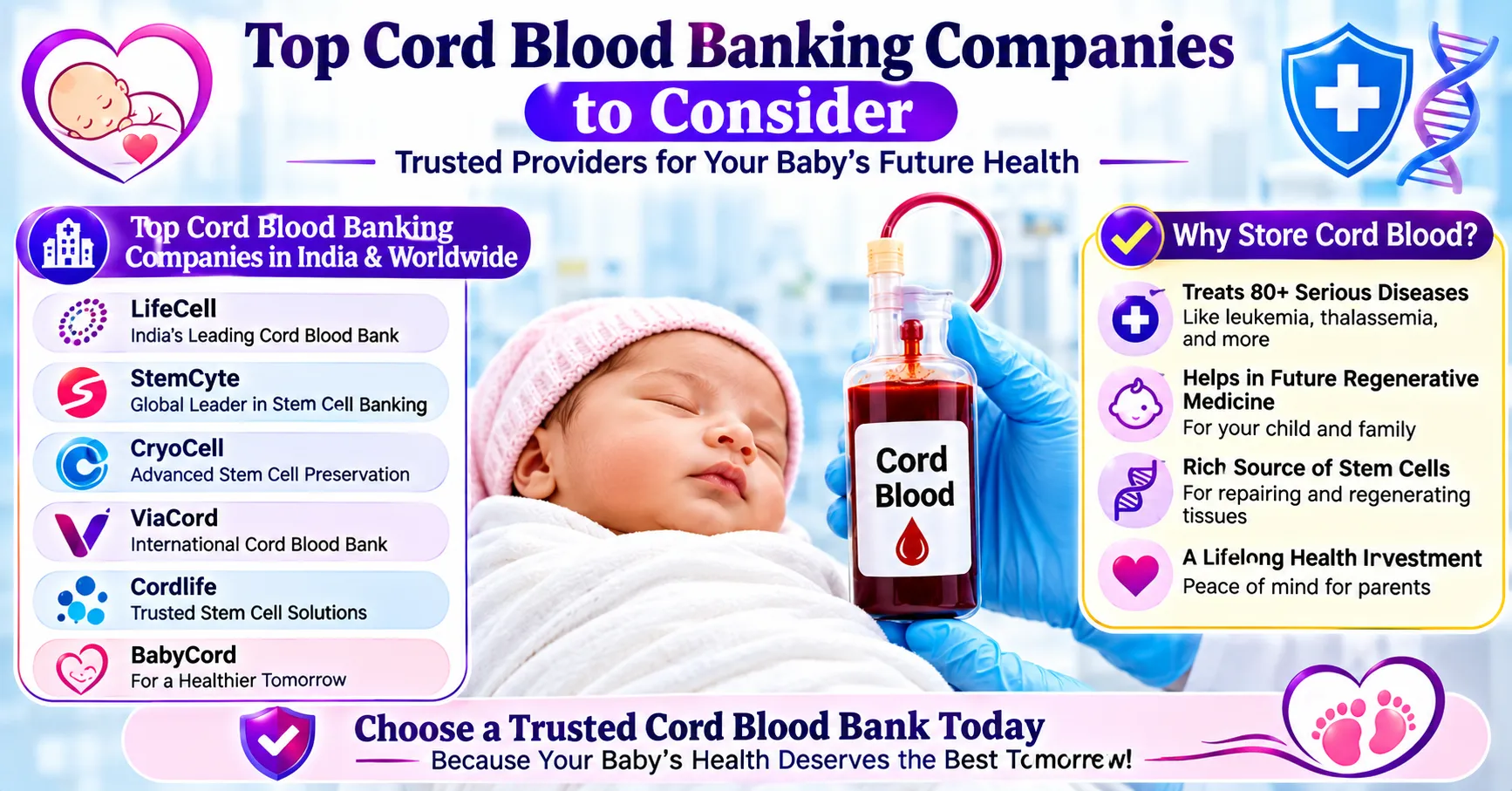
If you’ve decided private cord blood banking is right for your family, the next question is which company to trust with it. Pricing, storage plans, and guarantees vary more than most brochures let on. Here’s a factual, side-by-side look at the major players so you can compare before committing.
Note: Cord blood banking pricing changes often and companies run frequent promotions, so always confirm current rates directly with the provider before enrolling.
Cord Blood Registry (CBR)
CBR is the largest private cord blood bank in the US, with <cite index=”7-1″>over one million stored stem cell units</cite>. It’s also one of the older, more established names in the industry, having <cite index=”7-1″>been incorporated in the mid-1990s and grown through several mergers and ownership changes since</cite>.
Typical pricing: Around <cite index=”2-1″>$1,795 in initial fees plus a $400 annual storage fee</cite>, with prepaid options available for 18-year storage or lifetime storage that eliminate the yearly fee entirely.
Good for: Families who want the largest, most established storage network and don’t mind paying a premium for that track record.
ViaCord
ViaCord is one of the most recognized names in the space and frequently runs promotional pricing on processing fees. Recent offers have brought <cite index=”10-1″>cord blood processing down to around $500</cite>, though this typically doesn’t include the first year of storage, which is billed separately.
ViaCord is transparent that <cite index=”10-1″>cord tissue stem cells haven’t been used in actual treatment yet and remain in the research stage</cite> — worth knowing if a sales pitch implies otherwise.
Good for: Families who want to lock in a promotional processing rate and don’t mind separate annual storage billing.
Cryo-Cell International
Cryo-Cell is a publicly traded company and one of the longest-running cord blood banks, founded in the late 1980s. It holds accreditation from both AABB and FACT, two of the industry’s key quality certifications.
Typical pricing: Processing starts around <cite index=”16-1″>$710 with an annual storage fee of about $199</cite>, making it one of the more competitively priced options among the larger, accredited banks.
Good for: Families who want a publicly accountable company with long-standing accreditation credentials.
Americord
Americord positions itself as the budget-friendly alternative to the bigger names, and its pricing structure reflects that. It charges <cite index=”11-1″>no upfront processing fee at enrollment</cite> — families are only billed once the baby is born and the sample is confirmed viable. It also <cite index=”14-1″>doesn’t charge storage fees for the first 20 years</cite>, bundling that cost into the initial fee instead.
Good for: Families who want predictable, all-in pricing without recurring annual bills for two decades.
StemCyte
StemCyte is less of a household name but has a longer history than most people realize, having <cite index=”5-1″>started as a public cord blood bank in 1997</cite>. It’s also notable for holding an FDA-licensed cord blood product, something most private banks don’t have.
Typical pricing: <cite index=”5-1″>$795 in processing plus $200 a year in storage</cite>, or a prepaid 18-year plan and lifetime plan for families who want to avoid annual billing.
Good for: Families who want a bank with FDA licensing credentials and straightforward, published pricing.
Side-by-Side Cost Snapshot
| Company | Initial Fee | Annual Storage | Notable Feature |
|---|---|---|---|
| CBR | ~$1,795 | ~$400/yr | Largest storage network |
| ViaCord | ~$500 (promo) | Billed separately | Frequent promotional pricing |
| Cryo-Cell | ~$710 | ~$199/yr | Publicly traded, FACT accredited |
| Americord | $0 upfront | Included for 20 years | No annual billing for two decades |
| StemCyte | ~$795 | ~$200/yr | FDA-licensed product |
Prices above are approximate and reflect recent published rates — always verify directly with the company before enrolling, since promotions and multi-birth pricing can change these numbers significantly.
What to Compare Beyond Price
Price alone shouldn’t decide this. Before picking a bank, check:
- Accreditation — Look for AABB and, ideally, FACT accreditation, which reflect independent quality standards
- Track record — How many units has the company actually released for real transplants, not just stored?
- Hidden fees — Ask specifically about courier, release, and shipment fees that some banks bill separately from the advertised price
- Payment flexibility — Many banks now offer monthly payment plans and don’t charge until after the baby is born
Bottom Line
There’s no single “best” cord blood bank for every family — it depends on whether you prioritize a long track record (CBR, Cryo-Cell), lower upfront cost (Americord, Cryo-Cell), or FDA licensing credentials (StemCyte). Get itemized quotes from at least two or three companies, confirm what’s included versus billed separately, and check accreditation before you commit.
FAQs
Which cord blood bank is the cheapest?
Pricing changes frequently with promotions, but Americord and Cryo-Cell tend to have lower upfront costs, while ViaCord often runs limited-time processing discounts.
Is CBR worth the higher price compared to other banks?
CBR’s larger storage network and longer track record are the main reasons families pay a premium, but smaller banks with proper accreditation can be equally reliable for storage purposes.
Do all these companies offer payment plans?
Most major cord blood banks, including CBR, ViaCord, and Americord, offer monthly payment plans so you’re not paying the full amount upfront.
What accreditation should I look for in a cord blood bank?
AABB accreditation is the baseline most reputable banks carry. FACT accreditation is a stronger signal of quality, though fewer banks hold it.
Can I use FSA or HSA funds for cord blood banking?
Sometimes, if a healthcare provider documents medical necessity. Check with your FSA/HSA administrator and the bank directly, as eligibility varies.
Do these companies charge extra fees beyond what’s advertised?
Some do. Courier, release, and shipping fees can be billed separately from the advertised processing and storage costs, so it’s worth asking for an itemized quote before enrolling.