
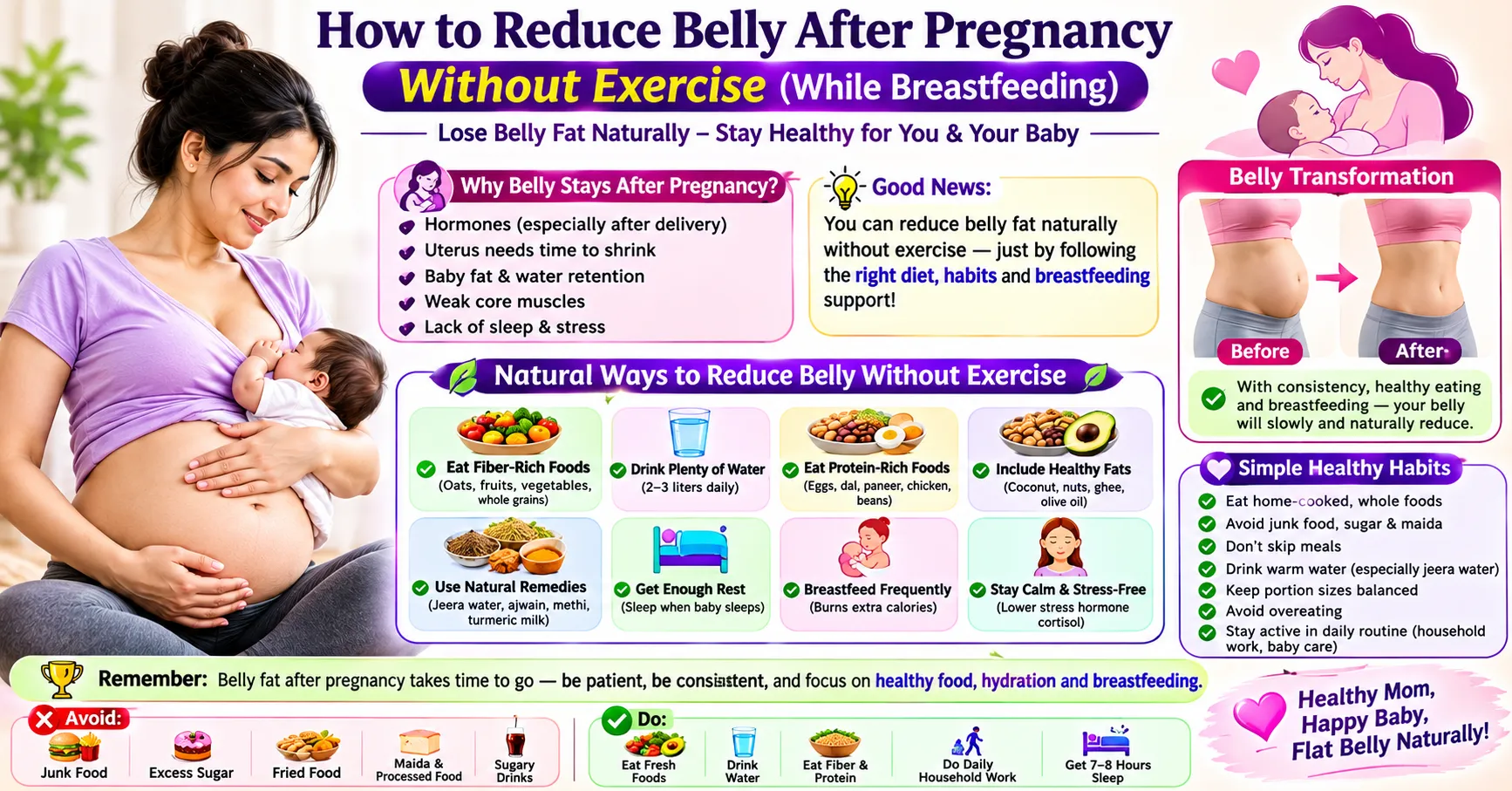
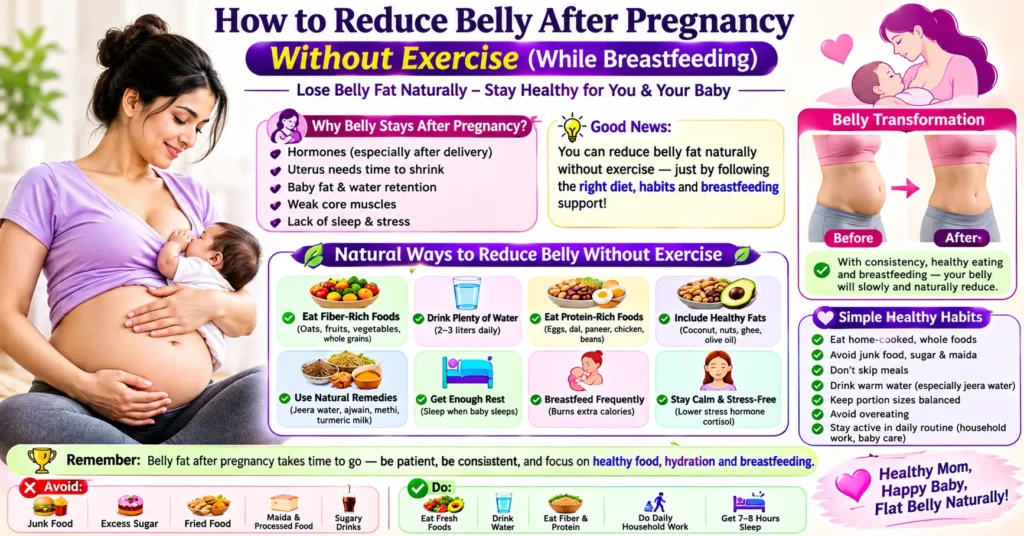
Not every new mom has the time, energy, or physical clearance to hit the gym. Between night feeds, diaper changes, and barely finding a minute to eat a proper meal, exercise often falls to the bottom of the list. If you’re breastfeeding and wondering how to reduce belly fat after pregnancy without exercise, you’re asking the right question, because diet, lifestyle habits, and breastfeeding itself can do a lot of the heavy lifting.
This guide covers practical, non-workout ways to shrink postpartum belly fat while breastfeeding safely.
Why Belly Fat Lingers After Pregnancy
During pregnancy, your body naturally stores extra fat around the abdomen. This isn’t random, it’s a survival mechanism to fuel breastfeeding after delivery. So some belly fat is actually meant to stick around temporarily to support milk production.
On top of that, your uterus takes 6-8 weeks to shrink back to its pre-pregnancy size, and abdominal muscles that stretched during pregnancy (sometimes separating, a condition called diastasis recti) take months to come back together. This is why the belly doesn’t “snap back” immediately, and honestly, it’s not supposed to.
Can Breastfeeding Alone Help You Lose Belly Fat?
Yes, to an extent. Breastfeeding burns roughly 300 to 500 extra calories a day as your body works to produce milk. This calorie burn, combined with the hormone oxytocin released during nursing (which helps the uterus contract back to size), does contribute to gradual belly fat reduction.
However, breastfeeding alone isn’t a guaranteed fix. Some women lose weight quickly while nursing, others hold onto fat stores longer because prolactin (the milk-making hormone) can also encourage fat retention, especially around the midsection. Genetics and how well you’re eating play a big role too.
Non-Exercise Ways to Reduce Belly Fat Postpartum
1. Prioritize Protein-Rich Meals
Protein keeps you full longer, supports muscle repair, and helps regulate blood sugar, which reduces belly fat storage over time. Include eggs, dals, paneer, chicken, fish, or Greek yogurt in every meal.
2. Cut Down on Refined Sugar and Processed Carbs
Sugary snacks and white bread spike insulin, which directly promotes fat storage around the belly. Swap them for whole grains, fruits, and nuts instead.
3. Stay Well Hydrated
Dehydration is often mistaken for hunger, leading to unnecessary snacking. Drinking enough water (8-10 glasses daily, more if breastfeeding) also supports milk supply and digestion, which helps reduce bloating that makes the belly look bigger than it is.
4. Practice Portion Control, Not Starvation
You don’t need to eat less while breastfeeding, you need to eat smart. Skipping meals slows metabolism and can hurt milk supply. Instead, eat balanced portions every 3-4 hours.
5. Improve Your Posture and Core Engagement
Simply standing and sitting with better posture, gently pulling your belly button toward your spine while doing daily tasks, engages your core passively throughout the day without formal exercise.
6. Wear a Postpartum Belly Wrap (With Doctor’s Approval)
Postnatal belly binding can provide gentle support to abdominal muscles and improve posture while your core heals. It won’t burn fat directly, but it supports the healing process and can reduce the appearance of belly bulge.
7. Fix Your Sleep Where You Can
Poor sleep raises cortisol, a stress hormone directly linked to belly fat storage. Even short naps when the baby sleeps can help regulate hormones better than pushing through exhaustion.
8. Manage Stress Actively
Chronic stress after childbirth (common with new moms) keeps cortisol elevated, which specifically targets belly fat storage. Simple breathing exercises, journaling, or even 10 minutes of quiet time can help.
Foods That Support Belly Fat Loss While Breastfeeding
- Oats and whole grains – keep you full and stabilize blood sugar
- Leafy greens – low calorie, high fiber, reduce bloating
- Fenugreek and cumin water – traditionally used to support digestion and milk supply
- Yogurt and probiotics – improve gut health, which is directly linked to belly fat
- Nuts and seeds – healthy fats that support hormone balance without adding excess calories
What to Avoid
- Crash dieting or skipping meals (hurts milk supply and slows metabolism)
- Waist trainers or tight shapewear for long hours (can restrict digestion and breathing)
- Comparing your postpartum body to influencers or celebrities who often have very different circumstances
- Any belly fat “supplements” or teas marketed for postpartum use without doctor approval
Frequently Asked Questions (FAQs)
How long does it take for belly fat to go away after pregnancy without exercise?
It varies widely, but most women notice gradual belly fat reduction over 6 to 12 months with consistent diet changes and breastfeeding, even without a formal workout routine.
Does breastfeeding reduce belly fat faster than not breastfeeding?
Generally yes, since breastfeeding burns extra calories daily and releases oxytocin, which helps the uterus shrink. But results vary from woman to woman based on hormones and diet.
Is it normal to still look pregnant weeks after delivery?
Yes, this is completely normal. The uterus takes weeks to shrink, and abdominal muscles need months to tighten back up. It’s not a reflection of effort or diet.
Can diastasis recti go away without exercise?
Mild cases can improve somewhat with time and posture correction, but moderate to severe abdominal separation usually needs targeted core exercises or physical therapy for full recovery.
What is the fastest way to reduce belly fat while breastfeeding without harming milk supply?
Focus on balanced, protein-rich meals, staying hydrated, and avoiding sugar spikes. Avoid any drastic calorie cuts, since this can reduce milk supply and energy levels.
Are belly wraps effective for postpartum belly fat?
Belly wraps mainly support posture and core healing rather than directly burning fat. They can help you feel more supported, but they aren’t a substitute for proper nutrition and time.
Does stress really affect belly fat after pregnancy?
Yes. Elevated cortisol from chronic stress is directly linked to increased fat storage around the abdomen, making stress management an important, often overlooked part of postpartum belly fat reduction.
Final Words
Reducing belly fat after pregnancy without exercise is absolutely possible, it just takes patience, consistent nutrition, and treating your body kindly while it heals. Combine these habits with breastfeeding’s natural calorie burn, and you’ll see steady progress without needing to step into a gym.