

You just saw two lines on that pregnancy test. Your heart is racing. Your mind is jumping to a hundred questions at once.
What do I do first? What should I eat? What’s actually safe? What am I supposed to feel?
At Babyslover, we’ve got you. This guide covers the most important pregnancy tips for first time moms — from the very first steps after a positive test through your first trimester. What to do, what to avoid, and honestly, what most pregnancy articles skip entirely.

Contents
- 1 First Steps: What to Do Right After a Positive Pregnancy Test
- 2 Healthy Pregnancy Tips for First Time Moms: Nutrition & Hydration
- 3 Tip 6: Keep Moving — Safely
- 4 Pregnancy Dos and Don’ts: What First Time Moms Should Avoid
- 5 First Trimester Checklist — Week by Week
- 6 Things Nobody Tells First Time Moms About Pregnancy
- 7 Questions to Ask at Your First Prenatal Appointment
- 8 Frequently Asked Questions About Pregnancy Tips for First Time Moms
- 9 Final Words from Babyslover
First Steps: What to Do Right After a Positive Pregnancy Test
Tip 1: Start Taking Prenatal Vitamins Today
One of the most critical pregnancy tips for first time moms: start a prenatal vitamin with folic acid — or better, methylfolate — the day you get a positive test.
Your baby’s neural tube develops in the first 28 days. We have a full guide on the best prenatal vitamins if you need help choosing.
Already taking them? Great. Keep going.
Tip 2: Call Your OB or Midwife Right Away
Your first prenatal appointment usually happens between weeks 8 and 10. Call now — don’t wait until you feel more pregnant.
If you don’t have an OB yet, ask your primary care doctor for a referral, or search for a certified OB-GYN accepting new patients in your area.
This first appointment is one of the most important pregnancy tips for first time moms — it confirms your pregnancy, calculates your due date, and sets up your full prenatal care plan.
Tip 3: Track Your Pregnancy Week by Week
One of the best early pregnancy tips for first time moms is to understand what’s actually happening in your body each week. Your baby’s development moves fast — especially in the first trimester. Check our pregnancy week-by-week guide to follow along.
Healthy Pregnancy Tips for First Time Moms: Nutrition & Hydration
Tip 4: Eat for Nutrients, Not Just Calories
One of the most practical pregnancy tips for first time moms: you don’t need significantly more calories in the first trimester. What you need is better-quality food.
Focus on leafy greens (folate), lean protein, whole grains, dairy or fortified alternatives, and colorful fruits and vegetables.
Key nutrients every first-time pregnant mom needs: folate, iron, calcium, DHA omega-3s, Vitamin D, and choline.
Tip 5: Stay Hydrated — More Than You Think
Your blood volume increases by up to 50% during pregnancy. Your body needs significantly more water to keep up.
Aim for 8 to 10 glasses of water daily. If plain water is unappealing with nausea, try cold water with cucumber, lemon, or ginger and peppermint teas.
Dehydration causes headaches, fatigue, and in severe cases, early contractions. Keep a water bottle with you at all times.
Tip 6: Keep Moving — Safely
Exercise is one of the pregnancy tips for first time moms that surprises many women — it’s not just safe, it’s recommended. Regular movement reduces back pain, improves sleep, boosts mood, and may even shorten labor.
Best options: walking, swimming, prenatal yoga, low-impact aerobics. Aim for 30 minutes on most days.
Avoid contact sports and anything with fall risk. See our pregnancy fitness guide for safe exercises at every stage.
Pregnancy Dos and Don’ts: What First Time Moms Should Avoid
These pregnancy tips for first time moms on what to avoid are just as important as knowing what to do.
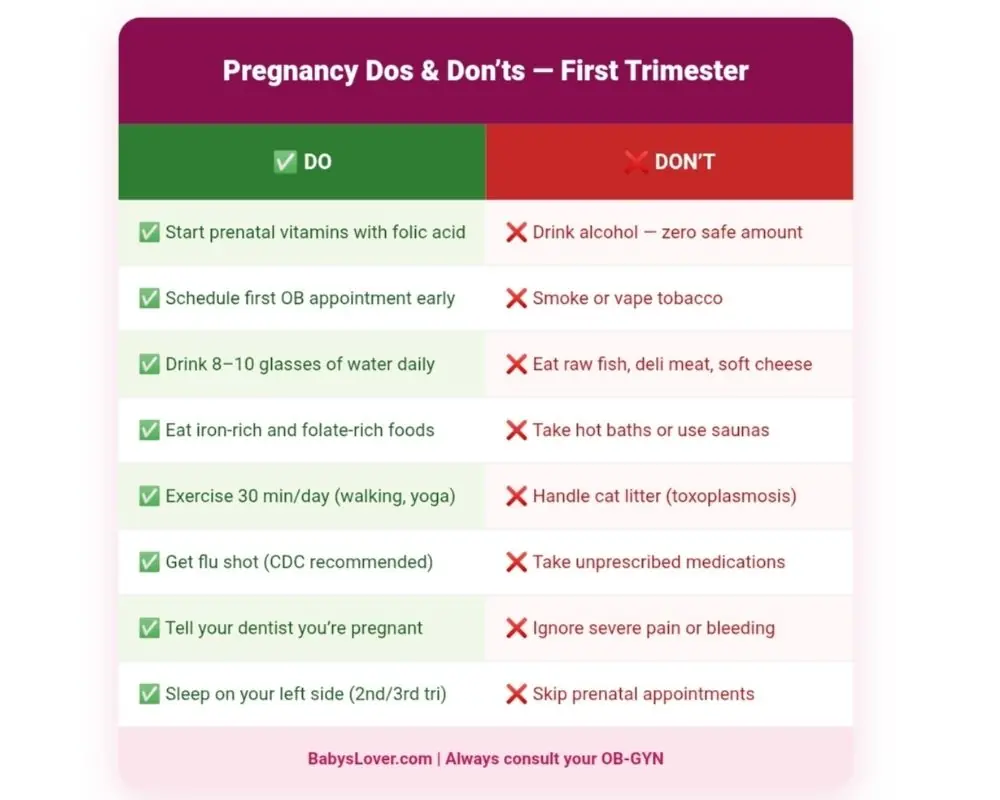
Tip 7: No Alcohol — Zero
There is no known safe amount of alcohol during pregnancy. Alcohol crosses the placenta and can cause fetal alcohol syndrome and other developmental problems.
This means wine, beer, cocktails — all of it. If you had a drink before you knew you were pregnant, don’t panic, but stop now.
Tip 8: Quit Smoking Immediately
Smoking raises the risk of miscarriage, premature birth, low birth weight, and SIDS. Quitting now is one of the most impactful pregnancy tips for first time moms we can give you.
Talk to your OB about support options — there are pregnancy-safe methods to help.
Tip 9: Foods to Avoid During Pregnancy
Skip these entirely: raw or undercooked meat and fish (sushi), deli meats and hot dogs (unless heated until steaming), soft cheeses like brie and feta, unpasteurized juice or dairy, high-mercury fish like swordfish and king mackerel, raw sprouts, and unwashed produce.
Limit caffeine to under 200mg per day — roughly one 12-oz cup of coffee. ACOG guidelines are clear: more than that increases miscarriage risk.
Tip 10: Avoid Hot Tubs, Saunas, and Overheating
Your baby cannot regulate temperature independently. Prolonged exposure to high heat — hot tubs, saunas, steam rooms — can raise your core body temperature to levels that are dangerous for fetal development.
Warm baths are fine. Extremely hot ones are not.
Tip 11: Check Every Medication with Your OB First
Many common over-the-counter medications — ibuprofen, certain antihistamines, some herbal supplements — are not safe during pregnancy.
Before taking anything, check with your OB. Even things that seem harmless can carry risks during certain trimesters.
First Trimester Checklist — Week by Week
This week-by-week checklist is one of the most practical pregnancy tips for first time moms we can offer. Follow it and nothing important will fall through the cracks.
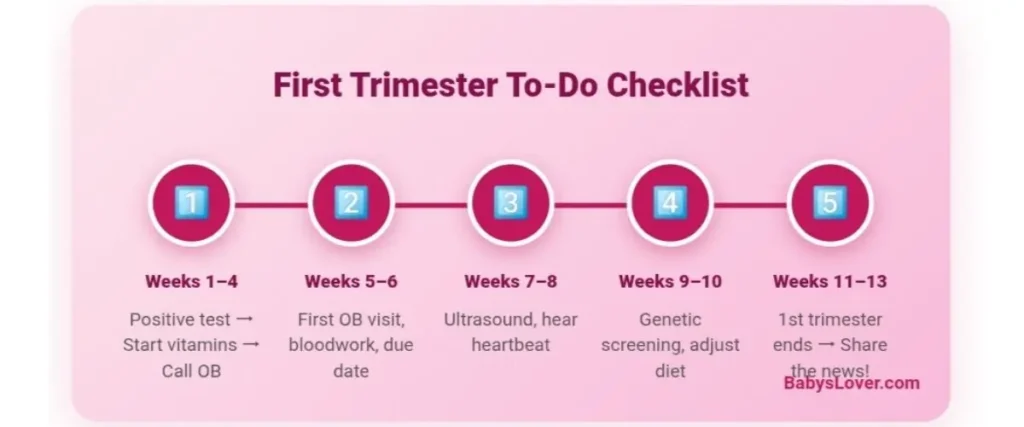
- Weeks 1–4: Start prenatal vitamins, confirm pregnancy, call your OB
- Weeks 5–6: First OB appointment, bloodwork, due date calculation
- Weeks 7–8: Ultrasound, hear heartbeat, discuss genetic testing options
- Weeks 9–10: Adjust diet, start researching birth plans, review health insurance
- Weeks 11–13: End of first trimester, consider sharing your news publicly
Things Nobody Tells First Time Moms About Pregnancy
This is what most pregnancy tips for first time moms guides skip entirely. Here’s what actually catches first-time moms off guard:
Tip 12: Morning Sickness Doesn’t Only Happen in the Morning
Despite the name, nausea can strike at any time — morning, afternoon, evening, all day. For some women, it’s mild. For others, it’s debilitating.
Things that actually help: eating small meals frequently, keeping crackers by your bed, ginger tea or ginger chews, Vitamin B6, cold foods (which often have less smell), and fresh air. If nausea is severe and causing weight loss, talk to your OB about prescription options.
Tip 13: Fatigue in the First Trimester Is Extreme
Not tired — exhausted. The kind of tired where you could fall asleep mid-sentence. This is your body growing a placenta from scratch. It’s real work.
Rest when you can. Don’t push through it. This usually improves significantly in the second trimester.
Tip 14: You’ll Have Emotions You Didn’t Expect
Crying at a commercial. Feeling unexpectedly anxious about the future. Not feeling as happy as you thought you would — or feeling more scared than excited.
All of this is normal. Hormones are in full swing, and the reality of what’s coming is enormous. Give yourself permission to feel whatever you’re feeling without judgment.
If anxiety or low mood feels persistent or overwhelming, tell your OB. Perinatal mental health support is real, available, and nothing to be ashamed of.
Tip 15: Your Body Will Do Strange Things — That’s Normal
Vivid dreams. Extra saliva. Metallic taste in your mouth. Skin changes. Spider veins. Increased sense of smell. Bleeding gums.
Most of these are completely normal pregnancy side effects that no one warned you about. Your body is doing something extraordinary right now.
If you’re not sure whether a symptom is normal, ask your OB. That’s what they’re there for — and no question is too small or embarrassing.
Questions to Ask at Your First Prenatal Appointment
Another key set of pregnancy tips for first time moms: come prepared to your first OB visit. Most first-time moms wish they’d asked more. Bring this list:
- When is my official due date?
- What prenatal vitamins do you specifically recommend?
- Which medications are safe if I get sick?
- What symptoms should make me call you immediately?
- What foods or activities should I specifically avoid given my health history?
- What genetic screenings do you recommend and when?
- How much weight gain is healthy for my starting weight?
- Can I continue my current exercise routine?
Frequently Asked Questions About Pregnancy Tips for First Time Moms
What should I do first when I find out I’m pregnant?
The first things to do: start a prenatal vitamin with folic acid or methylfolate, call your OB to schedule your first prenatal appointment, and stop any habits that aren’t pregnancy-safe (alcohol, smoking). That’s it for day one. Take it one step at a time.
What are the most important pregnancy tips for the first trimester?
The most important pregnancy tips for first time moms in first trimester: start prenatal vitamins, stay hydrated, eat nutrient-rich foods, avoid alcohol and raw fish, move gently, and attend every prenatal appointment. Weeks 4–10 are most critical.
What foods should first-time moms avoid during pregnancy?
Avoid raw or undercooked meat and fish, deli meats (unless heated), soft unpasteurized cheeses, high-mercury fish, raw sprouts, and alcohol. Limit caffeine to under 200mg per day.
Is it normal to feel scared during your first pregnancy?
Completely normal. First-time pregnancy comes with a flood of emotions — including fear, anxiety, and uncertainty alongside excitement. Hormones amplify everything. If anxiety becomes persistent or overwhelming, bring it up with your OB. You don’t have to manage it alone.
When should first-time moms schedule their first prenatal appointment?
As soon as you get a positive pregnancy test. Most OBs schedule the first appointment around weeks 8 to 10, but you should call immediately to get on the schedule — especially since good OBs fill up quickly.
Can I exercise during my first trimester?
Yes — exercise is encouraged throughout pregnancy if you have a healthy pregnancy. Walking, swimming, prenatal yoga, and low-impact aerobics are all safe. Get your OB’s approval before starting any new routine, and check our pregnancy fitness guide for trimester-specific advice.
What are the biggest mistakes first-time moms make during pregnancy?
The most common: skipping prenatal vitamins, not calling the OB soon enough, relying on unverified internet advice, skipping prenatal appointments, not asking for help when overwhelmed, and not taking rest seriously. Most of these come from not knowing what to expect — which is exactly what this guide is for.
Final Words from Babyslover
Here’s the truth about pregnancy tips for first time moms : no one has it all figured out, and that’s completely okay.
You’ll make mistakes. You’ll worry about things that turn out fine. You’ll feel things you didn’t expect. That’s not a sign you’re doing it wrong — that’s just pregnancy.
Follow these pregnancy tips for first time moms, show up to your appointments, take your prenatal vitamins, and ask for help when you need it.
That’s genuinely all it takes to be a great mom — starting right now.
Have a question we didn’t answer? Drop it in the comments. And when you’re ready to share your news, we’ve got everything you need on pregnancy announcement captions too.
7 thoughts on “15 Pregnancy Tips for First Time Moms: What to Do, Avoid & What Nobody Tells You”