
If you’ve been Googling “best age to get pregnant with PCOS” at 1 AM with fifteen browser tabs open, you’re not alone. Polycystic Ovary Syndrome (PCOS) affects up to 1 in 10 women of reproductive age in the US and UK, and it’s one of the most common reasons women struggle to conceive. But here’s the good news before we go any further: PCOS is one of the most treatable causes of infertility. It’s not a life sentence.
So let’s actually answer the question everyone’s asking — is there a “best” age, or is that just another thing to stress about?
Is There Really a Best Age to Get Pregnant with PCOS?
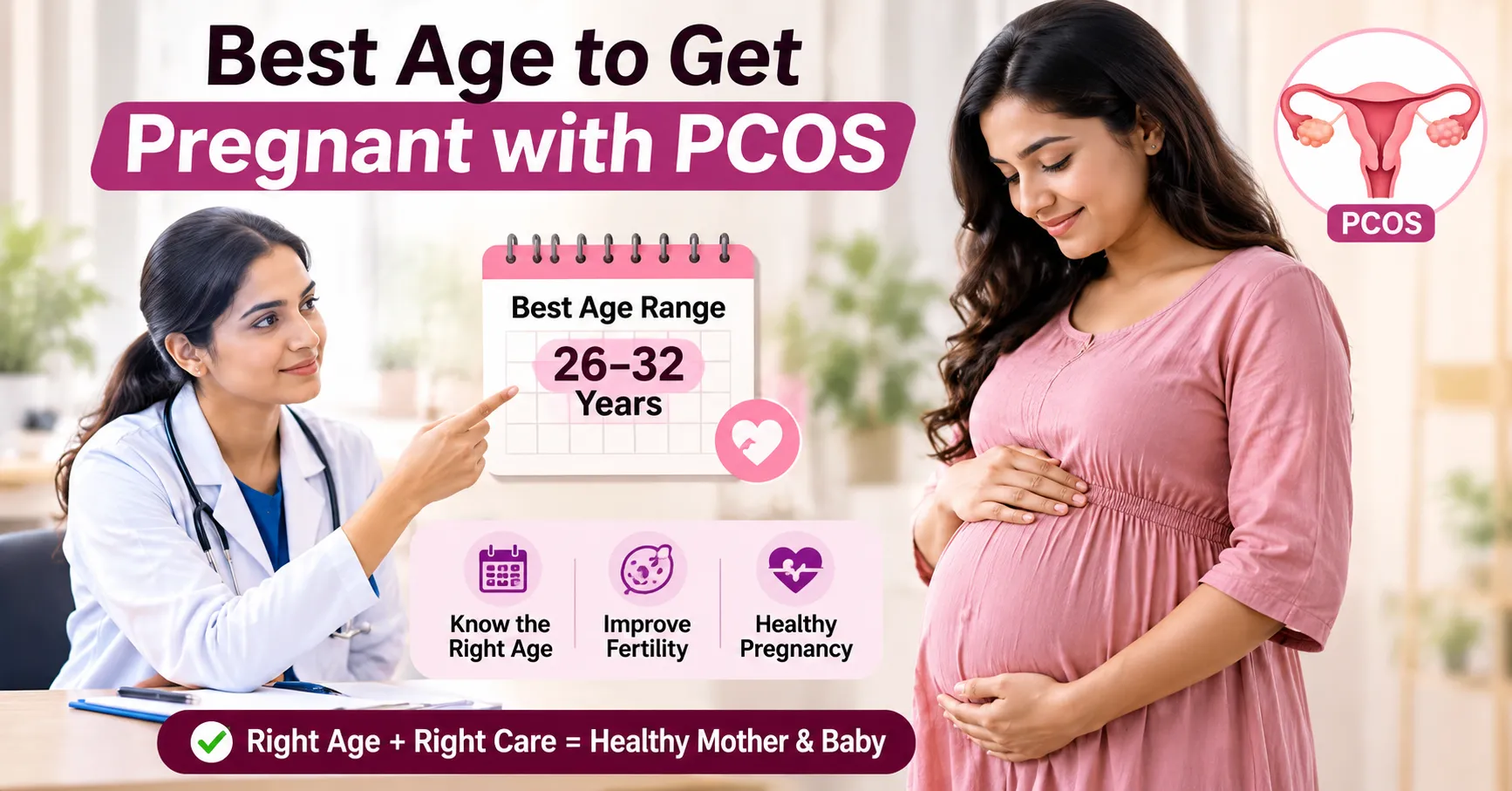
Short answer: your 20s and early 30s give you the biggest fertility window, but “best” doesn’t mean “only.” Women with PCOS get pregnant successfully in their late 30s and even early 40s all the time, especially with the right support.
Here’s why age matters at all. Two things decline as you get older:
- Egg quantity — every woman is born with a fixed number of eggs, and this pool naturally shrinks with age
- Egg quality — the chromosomal health of your eggs also declines over time, which is separate from PCOS itself
PCOS doesn’t lower your egg count. In fact, many women with PCOS have a higher ovarian reserve than average, which shows up as higher AMH (anti-Müllerian hormone) levels. The real challenge with PCOS isn’t running out of eggs — it’s irregular or absent ovulation, which makes it harder to predict (or achieve) a fertile window each month.
Breaking It Down by Age Group
Trying to Conceive with PCOS in Your 20s
This is generally considered the sweet spot. Egg quality is at its best, and even though PCOS may still cause irregular cycles, your body usually responds well to lifestyle changes and basic fertility treatments like letrozole or Clomid. Many women in their 20s conceive within a year of starting treatment.
PCOS Pregnancy After 30
Your 30s are still a very realistic decade to plan a pregnancy with PCOS. Egg quality starts a gradual decline, but it’s gradual, not a cliff edge. Doctors on both sides of the Atlantic — NHS and US-based OB-GYNs alike — generally encourage women with PCOS not to delay unnecessarily once they’re ready, simply because ovulation issues can already make timing harder without adding age into the mix.
PCOS Pregnancy After 35
This is where things get more nuanced. After 35, egg quality decline speeds up, and combined with PCOS-related ovulation issues, natural conception can take longer. This doesn’t mean it won’t happen — it just means it’s worth being proactive. Many women in this group succeed with a bit of medical support: ovulation induction, monitored cycles, or IVF if needed.
Getting Pregnant with PCOS After 40
It’s harder, but not impossible. Egg quality is the main hurdle here rather than PCOS itself. Fertility specialists usually recommend moving faster to testing and treatment rather than trying naturally for a long stretch, simply because time matters more at this stage.
Why PCOS Makes Timing Feel So Confusing
With a “normal” cycle, you roughly know when you’re ovulating. With PCOS, cycles can be irregular, delayed, or skipped altogether, which throws off your entire mental calendar. This is exactly why so many women with PCOS feel like they’re “behind,” even when their egg quality is perfectly fine for their age.
The truth is, PCOS makes the process of getting pregnant more unpredictable — it doesn’t automatically make your biological age-related fertility worse than anyone else’s.
What Actually Helps You Get Pregnant with PCOS, at Any Age
Age is only one piece of the puzzle. These factors matter just as much, sometimes more:
- Managing insulin resistance — up to 70% of women with PCOS have some degree of insulin resistance, and improving it often restores regular ovulation
- Reaching a healthy weight range for your body — even a 5-10% reduction in body weight (if you’re above your ideal range) can restart ovulation for some women
- Tracking ovulation properly — apps alone often aren’t reliable with PCOS; ovulation predictor kits or a fertility specialist’s monitoring work better
- Getting your AMH and hormone levels checked — this gives you a real number instead of guesswork
- Talking to a fertility specialist early rather than waiting a full year to “see what happens,” especially if you’re over 30
When Should You See a Fertility Specialist?
General guidance for women with PCOS:
- Under 35: Talk to a specialist if you haven’t conceived after 6-12 months of trying, or sooner if your cycles are very irregular
- 35 and older: Most doctors recommend seeking help after 6 months, not a full year
- 40 and older: Don’t wait — book a consultation as soon as you start trying
This isn’t about panic. It’s about not losing time you didn’t need to lose.
The Bottom Line
There’s no single magic age that guarantees a PCOS pregnancy, and there’s no age where it becomes impossible either. Your 20s and early 30s offer the most straightforward path, but plenty of women conceive successfully in their late 30s and beyond with the right support. What matters more than the number on your birthday is how well your PCOS is managed and how early you get personalized guidance.
If you’re currently trying to conceive with PCOS, the single best thing you can do today isn’t stressing about age — it’s booking that first conversation with a doctor who understands PCOS specifically, not just fertility in general.
Frequently Asked Questions
What is the best age to get pregnant with PCOS?
There’s no single “best” age, but the 20s and early 30s generally offer the smoothest path since egg quality is at its highest. Many women with PCOS also conceive successfully in their late 30s and 40s with proper medical support.
Does PCOS affect egg quality?
Not directly. PCOS mainly disrupts ovulation, not the quality of your eggs. Egg quality declines with age for every woman, PCOS or not — it’s a separate factor from the condition itself.
Can you get pregnant naturally with PCOS after 35?
Yes, it’s possible, though it may take longer due to the combined effect of irregular ovulation and natural age-related egg quality decline. Many women conceive naturally after 35 with lifestyle changes and ovulation tracking; others need a small assist from medication.
Does PCOS get worse with age?
PCOS symptoms can actually improve for some women as they get older, especially after weight or insulin management. However, fertility-related urgency does increase with age simply because egg quality naturally declines over time, separate from PCOS itself.
How long does it usually take to get pregnant with PCOS?
It varies widely. Some women conceive within a few months once ovulation is regulated; others take a year or more. This is exactly why tracking ovulation and seeking help early — rather than waiting — makes a real difference.
Is IVF necessary for PCOS pregnancy?
No, not for most women. Many people with PCOS conceive with lifestyle changes alone, or with simple ovulation-inducing medication like letrozole. IVF is usually considered later, if other methods haven’t worked or if there are additional fertility factors involved.
Does losing weight help you get pregnant with PCOS?
For women who are above their ideal body weight range, even a modest reduction of 5-10% can help restore regular ovulation. Weight isn’t the only factor though, so it’s worth discussing your specific case with a doctor rather than assuming it’s the only fix.
What age should I worry about PCOS and fertility?
“Worry” isn’t the right word, but it’s worth being more proactive from age 35 onward. Most doctors suggest seeking specialist help after 6 months of trying (instead of the usual 12) once you’re past 35, simply to avoid losing time unnecessarily.