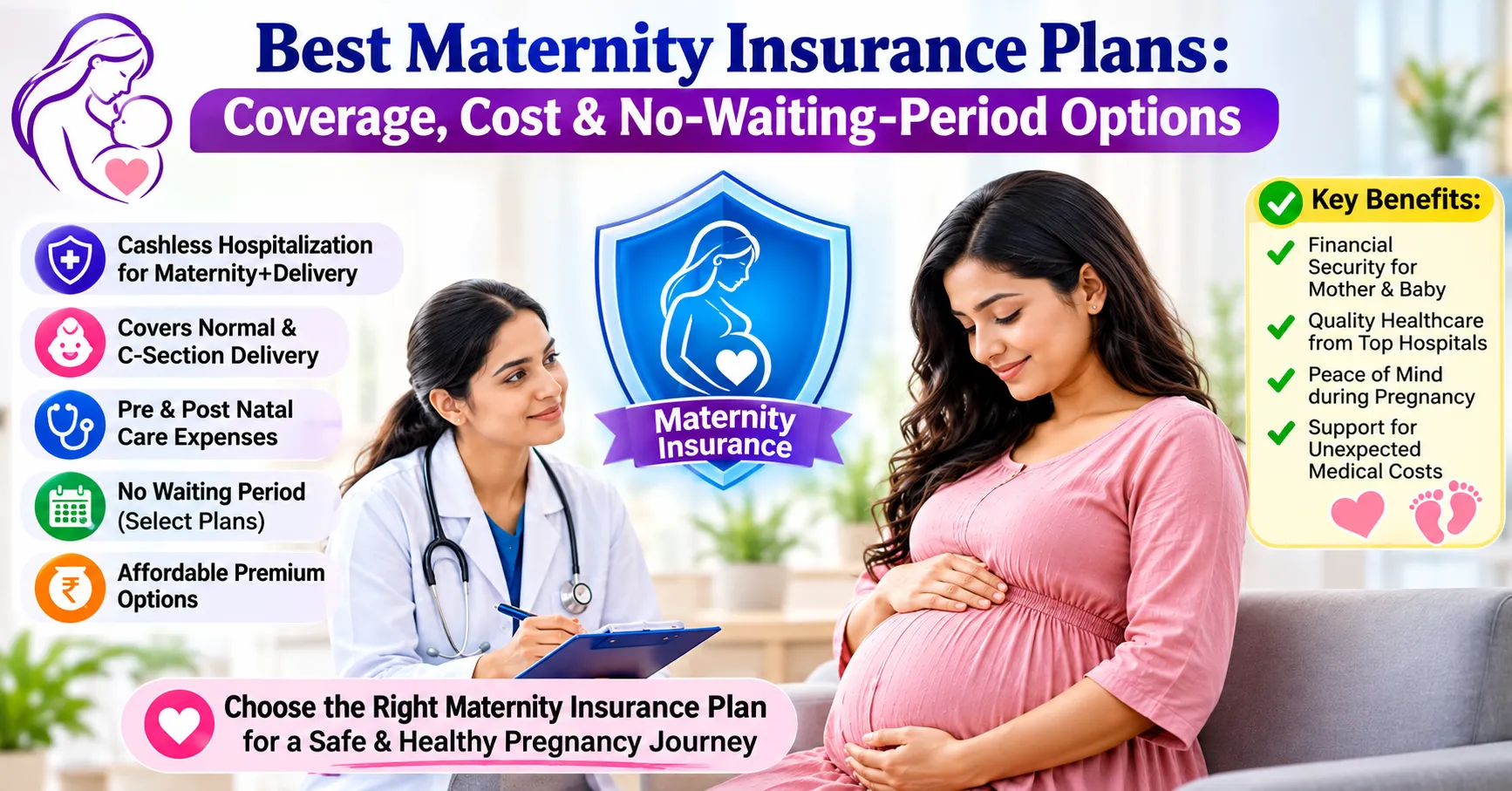
Finding the right maternity insurance policy before you start trying to conceive (or right after finding out you’re pregnant) can save you thousands of dollars. But not all plans are created equal — some make you wait a year before pregnancy is even covered, while others start protecting you from day one.
Here’s what actually matters when comparing the best maternity insurance plans, and where to find coverage that works even if you’re already expecting.
What Makes a Maternity Insurance Plan “Good”?
Before comparing providers, know what you’re actually looking for. A solid maternity insurance policy should cover:
- Prenatal checkups and lab work
- Delivery costs (vaginal and C-section)
- Hospital stay for you and baby
- Postpartum follow-up visits
- Newborn care in the first weeks
Most people focus only on the monthly premium, but the waiting period matters just as much — sometimes more.
Why the Waiting Period Is the Real Deal-Breaker
Here’s the catch most new parents run into: employer plans and many marketplace plans require 9 to 12 months of coverage before pregnancy-related expenses are paid. If you’re already pregnant when you apply, that plan won’t help you at all for this pregnancy.
This is exactly why maternity insurance plans with no waiting period are worth searching for specifically. These plans are harder to find and often cost more, but they’re the only real option if you’re applying mid-pregnancy. A few things to check before signing up for a no-waiting-period plan:
- Is it a short-term supplemental plan, or full major medical coverage?
- Does it cover complications (preeclampsia, gestational diabetes, NICU stays)?
- What’s the out-of-pocket max after delivery?
Employer Plans vs Private Plans vs Marketplace
Employer-sponsored plans are usually the cheapest option if you’re working full-time. Large employers negotiate group rates, so premiums are lower and coverage is broader. The tradeoff: you’re locked into open enrollment windows unless pregnancy qualifies you for a special enrollment period.
Private maternity insurance plans give you more flexibility if you’re self-employed, between jobs, or your employer’s plan is weak. They tend to cost more monthly, but some offer the no-waiting-period option that group plans rarely do.
Marketplace plans (ACA/Healthcare.gov in the US) are required to cover maternity care as an essential health benefit — no waiting period is allowed by law here. This makes marketplace plans one of the most reliable options if you’re shopping mid-pregnancy and don’t have employer coverage.
Cost Comparison at a Glance
| Plan Type | Avg Monthly Premium | Waiting Period | Best For |
|---|---|---|---|
| Employer-sponsored | $150–$400 | Usually none for ACA-compliant plans | Full-time employees |
| Private/Supplemental | $200–$600 | Often none (short-term plans) | Self-employed, gig workers |
| ACA Marketplace | $250–$550 | None (legally required) | Anyone without employer coverage |
| Short-term disability add-on | $20–$60 | 6–12 months typical | Income replacement during leave |
Don’t Forget Short-Term Disability Coverage
A maternity insurance policy covers medical bills, but it won’t replace your paycheck while you’re recovering. That’s where short term disability insurance and maternity leave coverage work together. Disability insurance typically pays 60–70% of your salary for six to eight weeks post-delivery — separate from your health insurance entirely.
If your employer doesn’t offer this automatically, it’s worth adding privately. Combined with your maternity insurance policy, this covers both the medical costs and the income gap during recovery.
Questions to Ask Before You Buy Any Plan
- Does this cover a C-section the same as a vaginal delivery?
- Is there a cap on total maternity-related payout?
- Does it include newborn care for the first 30 days?
- What’s the deductible specifically for delivery?
- Is there a waiting period, and does it apply if I’m already pregnant?
Skipping this checklist is how a lot of families end up with unexpected bills after delivery, even with “coverage.”
Bottom Line
The best maternity insurance plans aren’t necessarily the cheapest ones — they’re the ones with no waiting period, clear delivery cost caps, and coverage for complications. If you’re already pregnant, marketplace or select private plans are your safest bet since employer group plans may lock you out this cycle. Pair your health coverage with short-term disability insurance so you’re protected on both the medical and income side.
What is the best maternity insurance plan for someone already pregnant?
ACA Marketplace plans are usually the best option since they’re legally required to cover maternity care with no waiting period, regardless of when you enroll.
Are there maternity insurance plans with no waiting period?
Yes. ACA-compliant marketplace plans have no waiting period by law. Some private supplemental plans also offer immediate coverage, though they typically cost more.
Does health insurance cover the full cost of delivery?
Not usually. Most plans cover a large portion, but you’ll still have a deductible and possibly coinsurance, so check your out-of-pocket maximum before delivery.
Is short-term disability the same as maternity insurance?
No. Maternity insurance covers medical costs like delivery and hospital stays. Short-term disability replaces a portion of your income while you’re on leave recovering.
Can I add maternity coverage mid-pregnancy?
Only through plans without a waiting period, like ACA marketplace plans. Most employer and private plans won’t cover an already-existing pregnancy if you enroll late.
How much does maternity insurance typically cost per month?
Premiums range from about $150 to $600 a month depending on plan type, with employer-sponsored plans generally being the most affordable option.