
If you’re pregnant, chances are you’ve already gotten a brochure or two about cord blood banking. It’s one of those decisions expecting parents have to make fast — usually before 34 weeks — without a lot of clear, unbiased information.
Here’s a straightforward breakdown of what it actually costs, what it’s really used for, and how to decide if it’s worth it for your family.
What Is Cord Blood Banking?
After delivery, the blood left in your baby’s umbilical cord and placenta contains stem cells that can be used to treat certain blood disorders, immune conditions, and some cancers. Instead of discarding this blood, it can be collected and stored — either through a private cord blood bank or donated to a public cord blood bank.
The collection itself is quick, painless, and doesn’t interfere with delivery. The real decision is what happens to that blood afterward.
Public vs Private Cord Blood Banking
This is where most of the confusion comes from, so here’s the difference in plain terms:
| Public Banking | Private Banking | |
|---|---|---|
| Cost | Free | $1,500–$2,500 upfront + $100–$200/year |
| Availability | Donated, available to anyone who’s a match | Reserved exclusively for your family |
| Best for | General public good, medical research | Families with a history of treatable conditions |
| Storage guarantee | Not guaranteed for your family’s use | Guaranteed access for your child/family |
Public banking is essentially a donation — like donating blood, except it’s stem cells that go into a shared registry. Private banking means you’re paying to store it specifically for your own family’s potential future use.
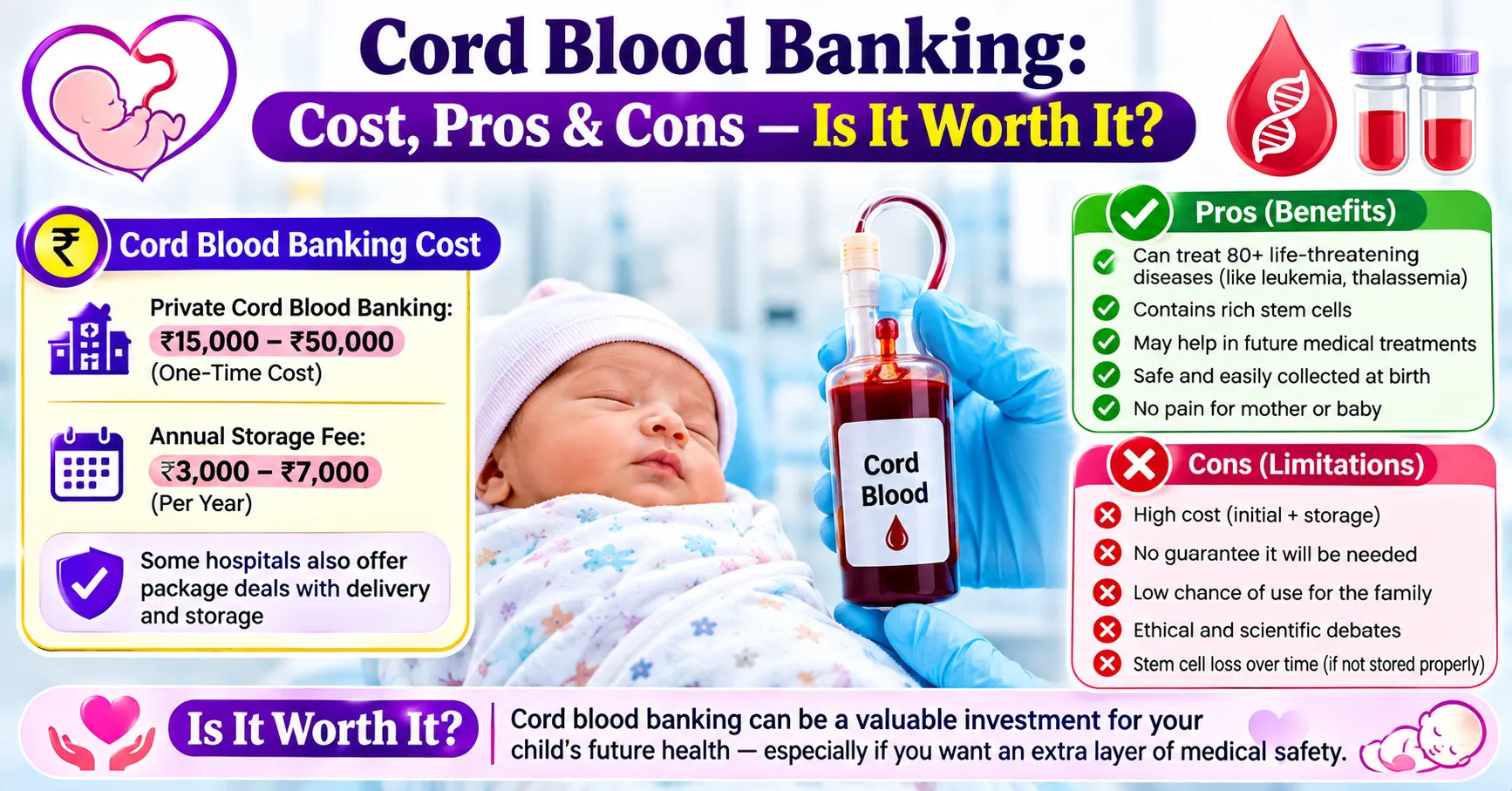
How Much Does Cord Blood Banking Really Cost?
Private cord blood banking typically breaks down like this:
- Enrollment fee: $1,350–$2,350 (one-time, covers collection kit and processing)
- Annual storage fee: $100–$200 per year
- Lifetime storage plans: Some banks offer a one-time fee of $3,000–$5,000 for 20+ years of storage instead of yearly billing
Over 18 years, private banking can add up to $3,500–$6,000+ total, depending on the provider and plan you choose. Public banking, by comparison, costs nothing.
What Cord Blood Is Actually Used For
This is the part marketing materials sometimes stretch. Realistically, cord blood stem cells are currently used to treat:
- Certain leukemias and lymphomas
- Some inherited metabolic disorders
- Certain immune system disorders
- Sickle cell disease and thalassemia (in some cases)
What it’s not currently a proven treatment for — despite what some marketing suggests — includes autism, cerebral palsy, and diabetes. Research is ongoing in these areas, but none are FDA-approved uses yet. If a private banking company promises broad future use for common conditions, take that with a grain of salt.
There’s also an important limitation: cord blood from a child generally can’t be used to treat that same child for genetic conditions, since the stem cells carry the same genetic markers as the disease. It’s more commonly used for siblings or other family members who are a match.
Who Actually Benefits Most from Private Banking?
Private banking makes the most financial and medical sense if:
- You have a family history of leukemia, lymphoma, or certain genetic blood disorders
- A sibling already has a condition that cord blood stem cells could treat
- You’re comfortable paying for a low-probability “insurance policy” for a serious future medical need
For most healthy families with no relevant medical history, the odds of ever using privately banked cord blood are statistically low — some estimates put lifetime usage odds at less than 1 in 20,000 for auto-use.
Does Insurance Cover Cord Blood Banking?
Generally, no. Most health insurance plans and maternity insurance policy coverage don’t include private cord blood banking as a standard benefit, since it’s considered elective rather than medically necessary. A small number of employer benefit packages include a discount or partial reimbursement, so it’s worth checking with HR if this is something you’re considering.
Public Donation: The Overlooked Option
If the cost of private banking doesn’t make sense for your family but you still want to contribute, public donation is free and helps others. Not every hospital offers a public banking program, so check availability in advance — space and logistics vary by hospital and region.
Bottom Line
Cord blood banking is a personal decision that depends heavily on your family’s medical history and budget. Private banking offers peace of mind for families with elevated risk factors but costs thousands over time with a statistically low chance of ever being used. Public banking costs nothing and contributes to the broader medical community, though it means giving up exclusive access. Talk to your OB and, if relevant, a genetic counselor before deciding — not just the banking company’s sales rep.
FAQs
How much does private cord blood banking cost?
Expect $1,500–$2,500 upfront plus $100–$200 per year in storage fees, or a lifetime plan around $3,000–$5,000 for 20+ years of storage.
Is cord blood banking covered by insurance?
Usually not. Most health and maternity insurance plans consider it elective and don’t cover the cost, though some employer benefit packages offer partial discounts.
What is cord blood actually used to treat?
Currently approved uses include certain leukemias, lymphomas, immune disorders, and inherited blood conditions like sickle cell disease — not conditions like autism or cerebral palsy.
Is public or private cord blood banking better?
It depends on your family’s medical history. Private banking makes sense if there’s a known genetic or blood disorder risk; otherwise, public donation is free and still medically valuable.
Can my child use their own banked cord blood if they get sick?
Not always. For many genetic conditions, a child’s own cord blood carries the same genetic markers as the disease, so it’s typically more useful for siblings or family members.
When do I need to decide about cord blood banking?
Most banks require enrollment by around 34 weeks of pregnancy, since collection kits need to be arranged before delivery.