
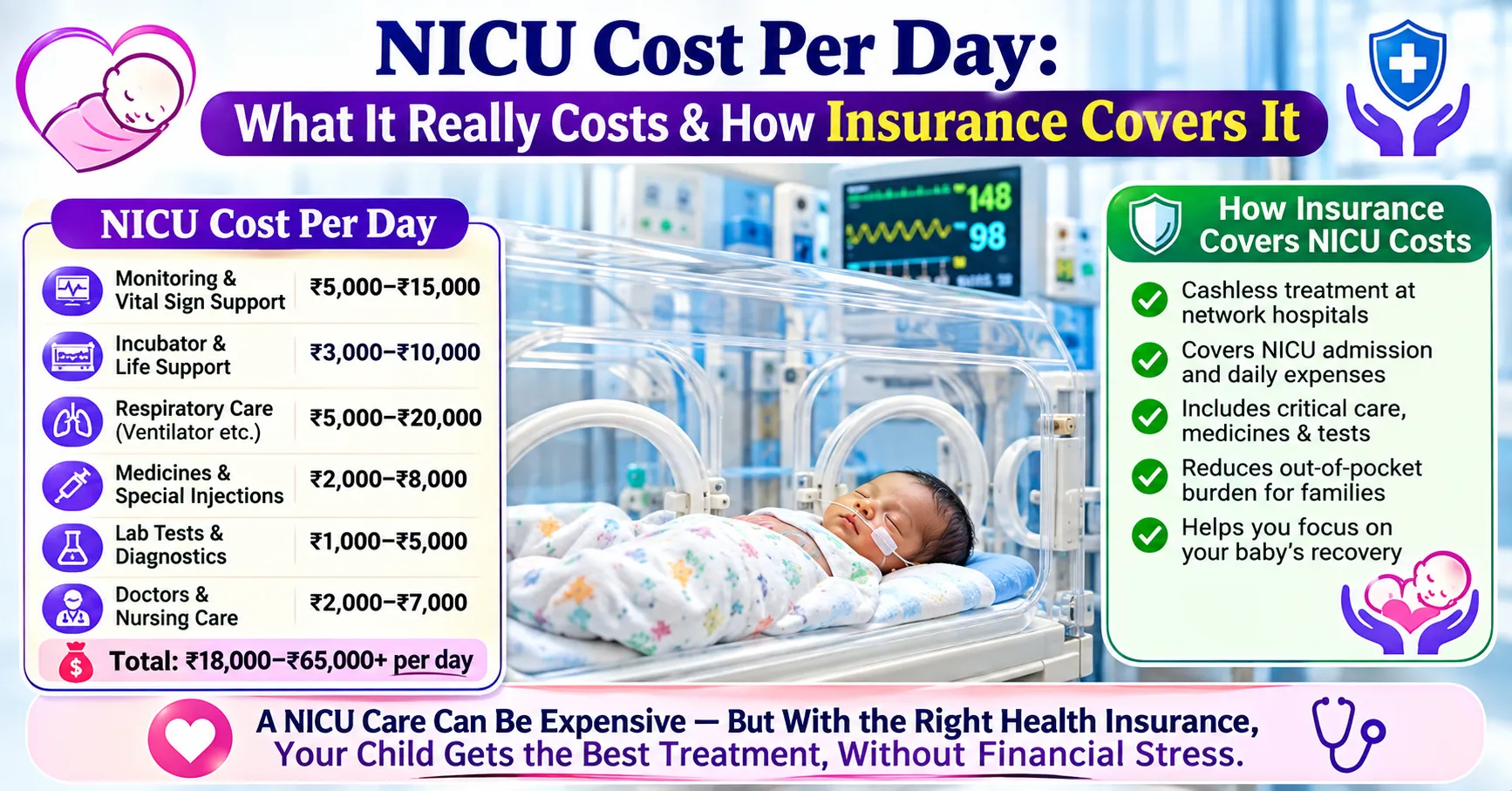
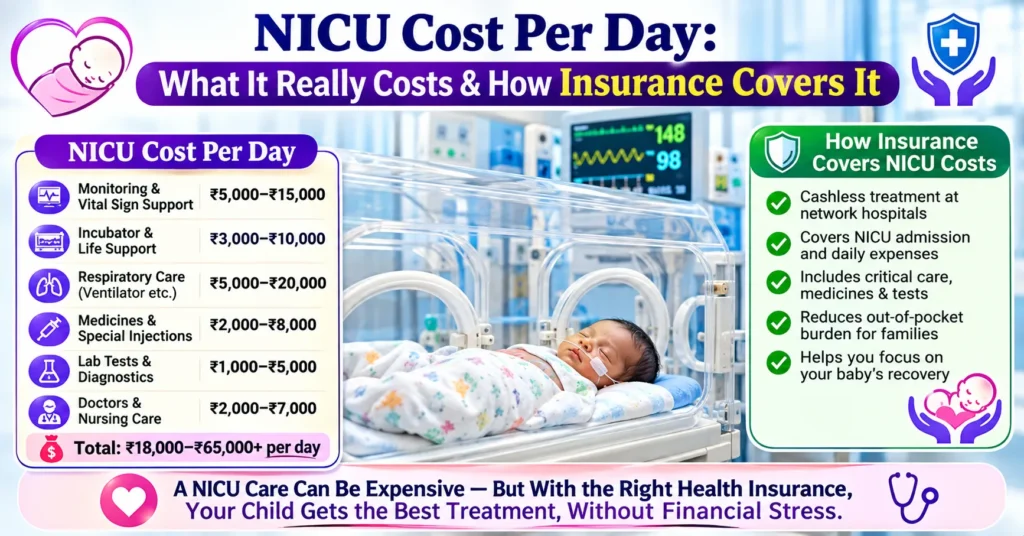
Finding out your baby needs NICU care is stressful enough without worrying about the bill. But knowing what to expect financially — before you’re staring at a hospital invoice — makes a huge difference. Here’s a real breakdown of NICU cost per day, what drives the price up, and how insurance actually covers it.
How Much Does NICU Cost Per Day?
NICU costs vary a lot depending on how sick your baby is and what level of care they need. On average:
- Level 1 (Well Newborn Nursery): $1,000–$2,000 per day
- Level 2 (Special Care Nursery): $2,000–$3,500 per day
- Level 3 (NICU): $3,500–$5,000+ per day
- Level 4 (Regional NICU, surgical care): $5,000–$10,000+ per day
These numbers cover the bed and basic monitoring. Add ventilator support, specialist consultations, imaging, or surgery, and daily costs can climb well past $10,000 for the most critical cases.
Total Cost for a Typical NICU Stay
Since NICU stays rarely last just one day, here’s what full stays typically add up to:
| Length of Stay | Estimated Total Cost |
|---|---|
| 1 week | $15,000–$35,000 |
| 2 weeks | $30,000–$70,000 |
| 1 month | $60,000–$150,000 |
| 2+ months (extreme preemie) | $200,000–$500,000+ |
Premature babies born before 28 weeks often need the longest stays, which is why NICU bills are consistently one of the highest medical expenses new parents face.
What Drives the Cost Up
A few factors push daily NICU costs higher:
- Gestational age at birth — the earlier the birth, the longer and more intensive the stay
- Ventilator or breathing support — adds thousands per day
- Surgery — heart, intestinal, or other newborn surgeries significantly increase costs
- Specialist consultations — neonatologists, cardiologists, and other specialists bill separately
- Length of stay — costs don’t scale down the longer you stay; some of the most intensive (and expensive) days come toward the end as babies are weaned off support
How Insurance Covers NICU Care
This is where your maternity insurance policy and general health plan matter more than almost anything else during pregnancy. A few things to understand:
Your baby needs their own coverage. Even if you have great insurance, your newborn typically needs to be added to your policy within 30 days of birth. NICU care that happens before you enroll the baby can create coverage gaps if you miss this window.
Most plans cover NICU care as medically necessary. Under the Affordable Care Act, NICU care generally falls under essential health benefits, meaning it can’t be denied outright. But “covered” doesn’t mean “free” — you’ll still hit deductibles and coinsurance.
Out-of-pocket maximums are your safety net. Once you hit your plan’s out-of-pocket max for the year, insurance covers 100% of costs beyond that. For a NICU stay lasting weeks or months, you’ll almost certainly hit this max — which is why understanding your specific out-of-pocket cap matters more than the daily cost itself.
In-network vs out-of-network matters a lot. If your baby is transferred to a different hospital’s NICU (common with high-risk deliveries), check whether that facility is in-network. Emergency transfers are often protected, but it’s worth confirming with your insurer directly.
Does Short-Term Disability Help Here?
Short term disability insurance for maternity leave covers your income during recovery, but it doesn’t directly pay NICU medical bills — that’s your health insurance’s job. However, if your NICU stay extends your own recovery time or delays your return to work, disability coverage can help bridge that income gap while you’re spending time at the hospital instead of working.
What If You Can’t Afford the Bill?
If NICU costs go beyond what insurance covers, a few options can help:
- Hospital financial assistance programs — most hospitals have charity care or sliding-scale programs for NICU families
- Payment plans — hospitals will often negotiate interest-free payment plans rather than sending bills to collections
- State programs — some states offer supplemental coverage for NICU care through Medicaid or CHIP, even if your income is above the usual threshold
- Nonprofit assistance — organizations exist specifically to help families cover NICU-related costs and travel expenses
Bottom Line
NICU cost per day can range from $1,000 to over $10,000 depending on the level of care, and total stays often reach into six figures for premature or critically ill newborns. The best financial protection is understanding your insurance plan’s out-of-pocket maximum before delivery, enrolling your baby promptly after birth, and knowing what financial assistance options exist if costs exceed what you can pay.
FAQs
How much does one day in the NICU cost?
It depends on the level of care, ranging from around $1,000 per day for basic special care to $10,000+ per day for critical care involving ventilators or surgery.
Does insurance cover NICU costs?
Yes, in most cases. NICU care is generally considered medically necessary and covered under most health plans, though you’ll still be responsible for deductibles and coinsurance until you hit your out-of-pocket maximum.
How do I add my baby to my insurance for NICU care?
Most insurers require enrollment within 30 days of birth. Contact your insurance provider as soon as possible after delivery to avoid coverage gaps.
What’s the average total cost of a NICU stay?
A one-week stay typically costs $15,000–$35,000, while stays of a month or longer can reach $60,000–$150,000 or more, depending on the baby’s condition.
Can I get financial help if I can’t afford NICU bills?
Yes. Hospital financial assistance programs, payment plans, state Medicaid/CHIP programs, and nonprofit organizations can all help reduce or manage NICU-related costs.
Does short-term disability cover NICU expenses?
No, short-term disability replaces your income during leave, not medical bills. NICU costs are covered separately through your health insurance plan.