
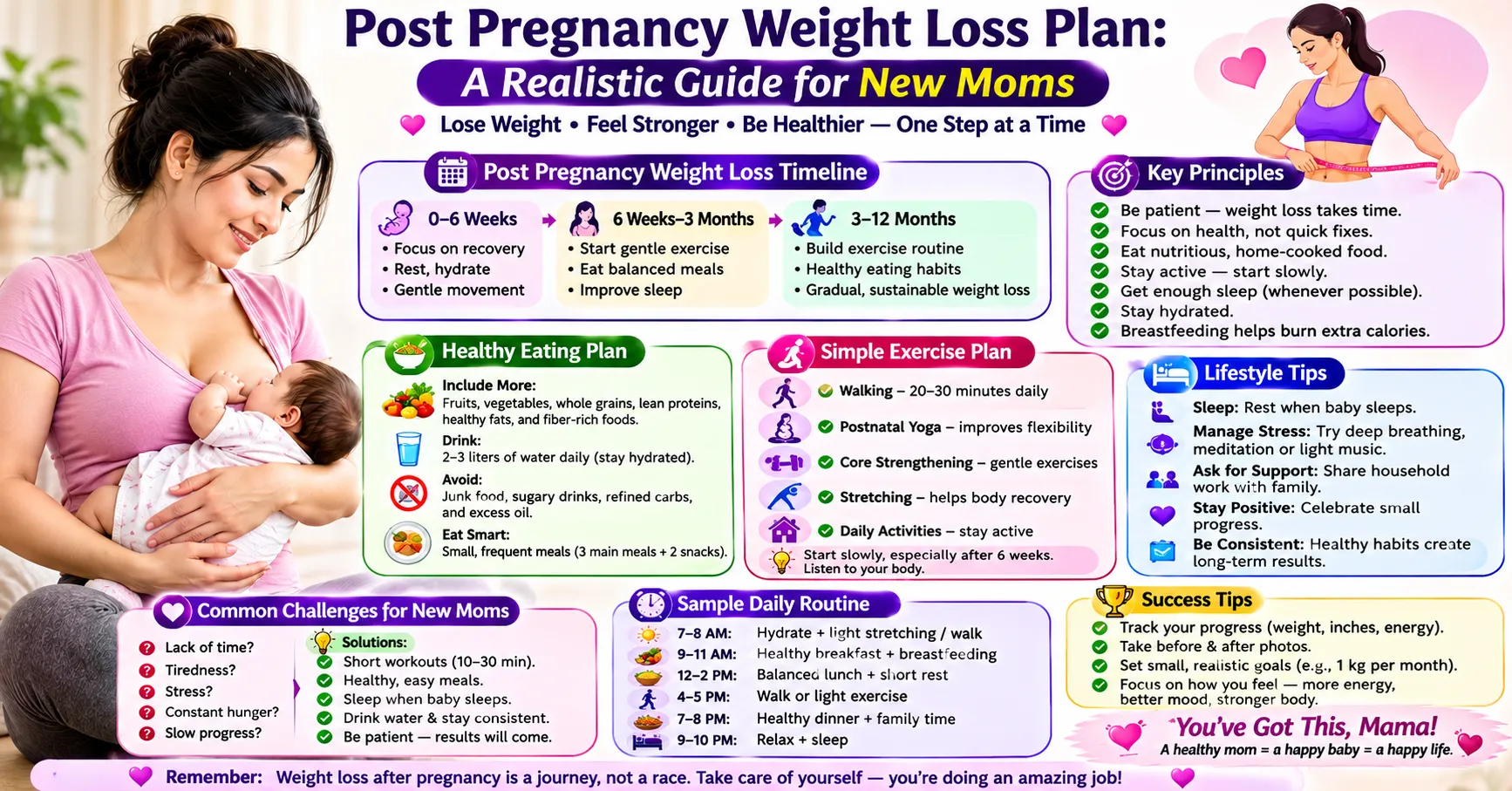
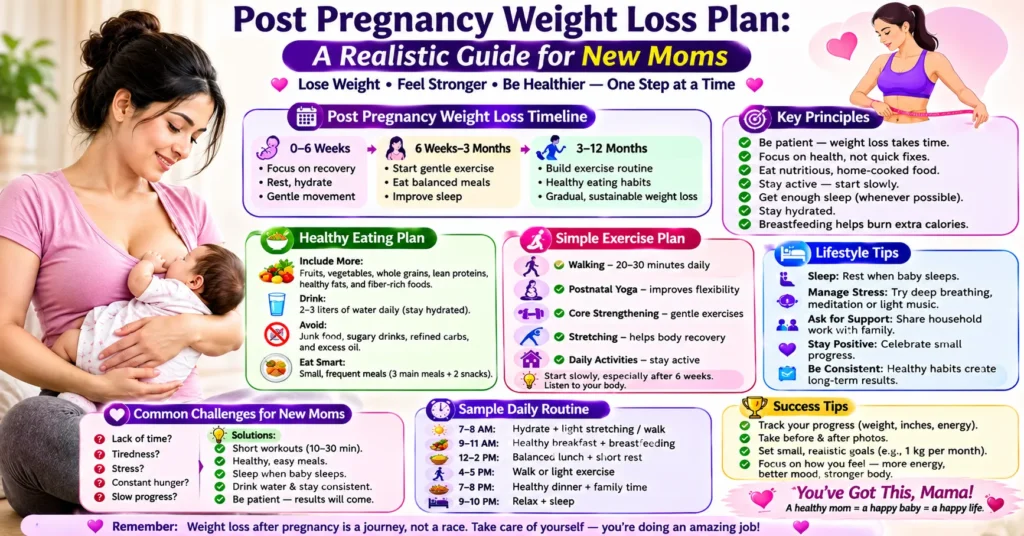
Becoming a mom changes everything, including your body. If you’re staring at the mirror wondering where to even start with postpartum weight loss, you’re not alone.
Millions of new mothers search for a safe, sustainable post pregnancy weight loss plan every single day, and the good news is: it’s absolutely doable, without starving yourself or spending hours at the gym.
This guide breaks down a realistic post pregnancy weight loss plan, covering diet, exercise, breastfeeding, and the mental side of postpartum body changes too.
Why Postpartum Weight Loss Feels Different
Your body just spent nine months growing a human. Hormones like relaxin, progesterone, and prolactin are still adjusting. Add sleepless nights, breastfeeding demands, and zero time for yourself, and it’s clear why postnatal weight loss isn’t as simple as “eat less, move more.”
Most doctors recommend waiting until your six-week postpartum checkup before starting any structured weight loss after delivery, especially after a C-section. Your body needs time to heal first.
Step 1: Set Realistic Expectations
Losing baby weight isn’t a race. On average, healthy postpartum weight loss happens at a rate of about 1 to 2 pounds a week, once you’re cleared for exercise. Some of the weight (water, some fat stores) drops off within the first few weeks naturally. The rest takes months, and that’s completely normal.
If you’re breastfeeding, know that nursing itself burns extra calories, sometimes 300-500 a day, which naturally supports weight loss while breastfeeding, as long as you’re eating enough to keep your milk supply healthy.
Step 2: Nutrition First, Not Restriction
Crash diets are the worst thing you can do postpartum. Your body needs fuel to recover and, if breastfeeding, to produce milk. Instead of cutting calories drastically, focus on nutrient density.
What to prioritize:
- Protein at every meal — eggs, lentils, paneer, chicken, fish, Greek yogurt. Protein keeps you full and supports muscle recovery.
- Fiber-rich carbs — oats, brown rice, whole wheat roti, sweet potatoes. These stabilize blood sugar and prevent energy crashes.
- Healthy fats — nuts, ghee in moderation, avocado, olive oil. Fats support hormone balance, which matters a lot postpartum.
- Hydration — aim for at least 8-10 glasses of water daily, more if breastfeeding.
- Iron-rich foods — spinach, dates, jaggery, red meat, to rebuild what you lost during delivery.
Avoid processed snacks, sugary drinks, and skipping meals. Skipping meals often backfires, leading to overeating later and slower metabolism.
Step 3: Postpartum Exercise Plan (Start Slow)
Once your doctor gives the green light, ease back into movement. Don’t jump straight into intense workouts.
Weeks 6-8: Gentle walks, pelvic floor exercises (Kegels), light stretching.
Weeks 8-12: Add postnatal yoga, core-strengthening moves specifically designed for diastasis recti (abdominal separation), and short 20-minute walks daily.
Month 3 onward: Gradually introduce strength training with light weights, bodyweight exercises like modified planks and squats, and low-impact cardio like swimming or cycling.
A common mistake is jumping straight into crunches, which can worsen diastasis recti. Always check for ab separation before doing traditional core work.
Step 4: Sleep and Stress Management
This part gets ignored constantly, but poor sleep and high cortisol (stress hormone) directly sabotage weight loss. Sleep deprivation increases hunger hormones and cravings for sugary, high-calorie foods.
You obviously can’t control your baby’s sleep schedule, but small habits help: nap when the baby naps, ask your partner or family for help with night feeds when possible, and try 5-minute breathing exercises to lower stress.
Step 5: Track Progress the Right Way
Skip the daily scale-watching, it messes with your head. Instead, track:
- How your clothes fit
- Energy levels
- Strength improvements (can you do more reps, walk longer?)
- Monthly photos instead of daily weigh-ins
Weight fluctuates due to water retention, hormones, and breastfeeding, so daily numbers are misleading and discouraging.
A Sample Day on a Post Pregnancy Weight Loss Plan
- Breakfast: Vegetable oats with a boiled egg
- Mid-morning: A handful of almonds and a fruit
- Lunch: Grilled chicken or dal, brown rice, sautéed greens
- Evening: Herbal tea with roasted chana
- Dinner: Grilled fish or paneer with quinoa and salad
- Before bed: Warm turmeric milk
This kind of balanced eating supports both energy and gradual fat loss without feeling restrictive.
When to See a Doctor
If you’re experiencing extreme fatigue, hair loss, mood swings that don’t improve, or if weight loss stalls completely despite consistent effort, get your thyroid checked. Postpartum thyroiditis is common and often mistaken for “just not trying hard enough.”
Frequently Asked Questions (FAQs)
How long does it take to lose weight after pregnancy?
Most women take anywhere from 6 months to a year to return close to their pre-pregnancy weight, depending on how much weight was gained, delivery type, and lifestyle factors. There’s no fixed timeline, and that’s okay.
Does breastfeeding help you lose weight faster?
Yes, breastfeeding burns extra calories daily, which can support weight loss. However, it’s not guaranteed for everyone since hormones like prolactin can also cause the body to hold onto fat stores, especially in the first few months.
Is it safe to diet while breastfeeding?
Strict dieting isn’t recommended while breastfeeding. Instead, focus on nutrient-dense, balanced meals. Cutting calories too much can affect milk supply and your own energy levels.
When can I start exercising after a C-section?
Most doctors recommend waiting at least 6-8 weeks after a C-section before starting exercise, and even then, starting with gentle movement like walking before progressing to core work.
Why is my belly still not flat months after delivery?
This is often due to diastasis recti (abdominal muscle separation) or loose skin, not just fat. It can take 6-12 months to improve naturally, and targeted core exercises help significantly.
What foods should I avoid postpartum?
Limit processed sugar, fried foods, excessive caffeine, and alcohol, especially if breastfeeding. These can affect energy levels, milk quality, and slow down recovery.
Is weight loss after pregnancy different for every woman?
Absolutely. Genetics, age, how much weight was gained during pregnancy, delivery type, and even sleep quality all play a role. Comparing your journey to others rarely helps.
Final Words
Postpartum weight loss is a marathon, not a sprint. Be patient with your body, it did something incredible. Focus on nourishing yourself, moving gently, and getting support where you can. The weight will come off steadily when your body feels safe and well-fed, not deprived.