
Trying to lose weight after having a baby while also breastfeeding feels like walking a tightrope. You want your body back, but you also don’t want to risk your milk supply or your energy levels. It’s one of the most searched topics among new moms, and for good reason, there’s a lot of conflicting advice out there.
Here’s a clear, safe breakdown of how post pregnancy weight loss actually works while breastfeeding, without extreme diets or guesswork.
Does Breastfeeding Really Help You Lose Weight?
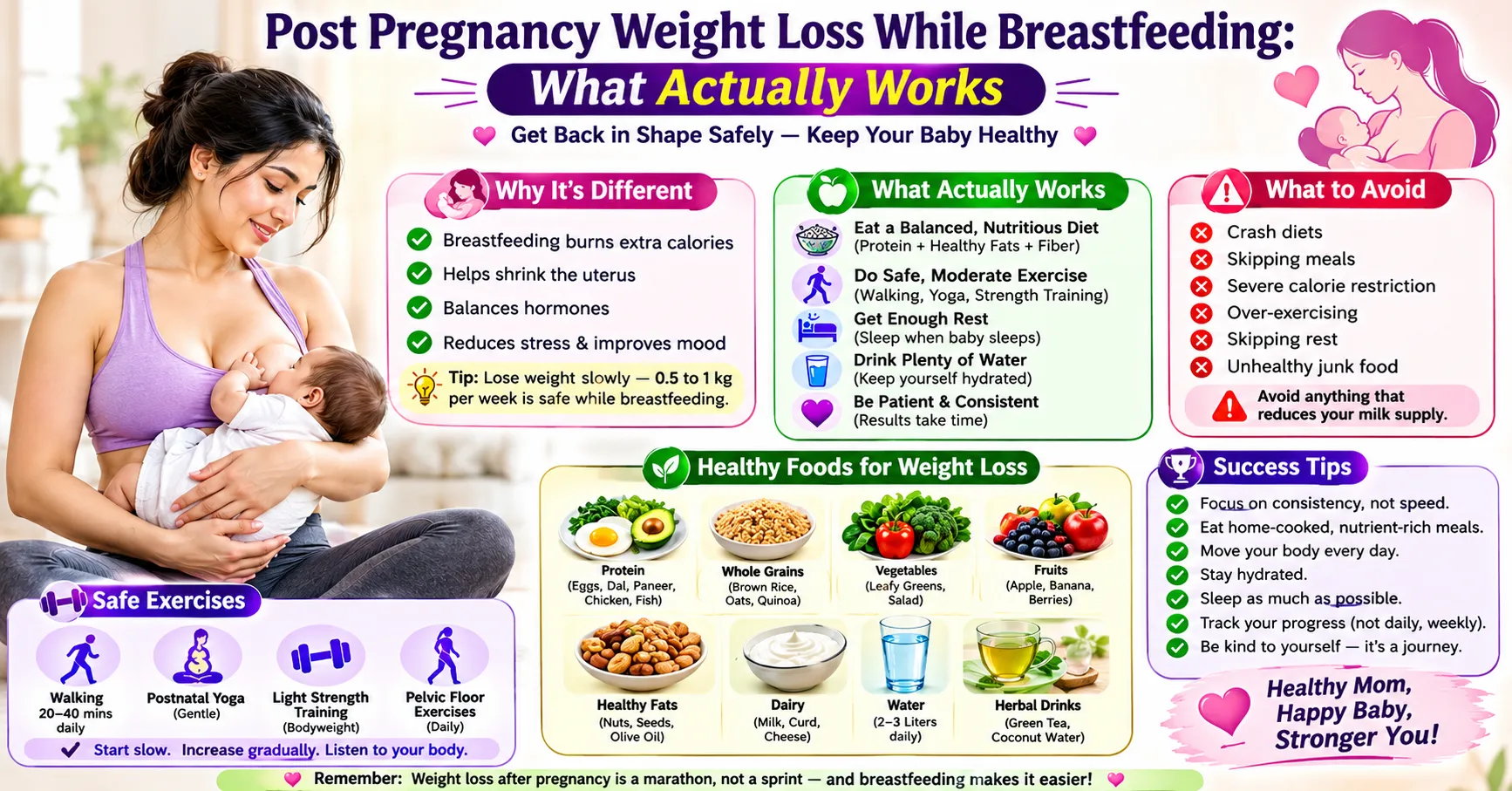
Yes, but it’s not automatic. Breastfeeding burns an extra 300 to 500 calories a day on average, since your body is working hard to produce milk. For many women, this creates a natural calorie deficit that supports gradual weight loss, even without dieting.
That said, breastfeeding also increases hunger and can make some women hold onto extra fat stores, particularly in the first 3 to 6 months, thanks to the hormone prolactin. So while nursing helps, it’s not a guaranteed shortcut, your eating habits still matter most.
Is It Safe to Diet While Breastfeeding?
Strict dieting is not recommended while breastfeeding. Cutting calories too aggressively can reduce milk supply and leave you exhausted, which nobody needs with a newborn around. Most lactation experts recommend not going below 1800-2000 calories a day while nursing, though this varies based on activity level and body type.
The goal isn’t restriction, it’s better food choices and consistent, moderate habits.
A Safe Weight Loss Plan While Breastfeeding
1. Eat Enough, But Eat Smart
Focus on whole foods: lean protein, whole grains, vegetables, and healthy fats. These keep you fuller for longer and support milk production better than empty-calorie snacks.
2. Don’t Skip Meals
Skipping meals to “save calories” often backfires, it slows metabolism and can reduce milk supply. Aim for 3 balanced meals plus 2 small snacks daily.
3. Stay Hydrated
Breastfeeding increases fluid needs significantly. Dehydration can be mistaken for hunger and also affects milk supply. Aim for at least 10-12 glasses of water a day.
4. Add Gentle Movement When You Can
Once cleared by your doctor, short walks, light yoga, or postnatal stretches support weight loss without exhausting an already tired body.
5. Prioritize Sleep (Even in Short Bursts)
Sleep deprivation raises cortisol and hunger hormones, making weight loss harder regardless of diet. Napping when the baby naps genuinely helps more than people realize.
6. Be Patient With the Timeline
Weight loss while breastfeeding tends to be slower and steadier than crash dieting, but it’s more sustainable and doesn’t compromise your milk supply or energy.
Foods That Support Weight Loss and Milk Supply Together
- Oats – support milk supply and provide slow-releasing energy
- Eggs – high protein, keeps hunger in check
- Leafy greens – nutrient-dense, low calorie
- Fenugreek seeds – traditionally used to support lactation
- Almonds and walnuts – healthy fats that support hormone balance
- Dal and legumes – plant protein plus fiber for fullness
What to Avoid While Losing Weight and Breastfeeding
- Very low-calorie diets or intermittent fasting in the early months
- Detox teas, weight loss supplements, or appetite suppressants
- Excessive caffeine, which can affect the baby through breast milk
- Alcohol, especially in larger amounts, which can pass into breast milk
- Comparing your progress to non-breastfeeding moms, since your body’s needs are genuinely different
When Weight Loss Stalls While Breastfeeding
If your weight plateaus despite eating well, it could be due to:
- Hormonal shifts (prolactin, thyroid changes postpartum)
- Not eating enough (undereating can stall metabolism)
- High stress or poor sleep
- Simply your body holding onto some fat reserves to protect milk supply, which is biologically normal
If weight loss completely stalls for months along with fatigue or hair loss, it’s worth getting your thyroid checked, postpartum thyroiditis is common and often overlooked.
Frequently Asked Questions (FAQs)
How much weight can I lose while breastfeeding?
Most women lose about 1 to 2 pounds a week once eating enough and moving a little, though this varies. Some lose weight faster in the first few months, others see slower, steadier loss over the first year.
Will dieting affect my milk supply?
Aggressive calorie cutting can reduce milk supply. Moderate, balanced eating with enough calories (generally not below 1800 per day) usually doesn’t affect supply for most women.
Why am I not losing weight even though I’m breastfeeding?
Breastfeeding alone doesn’t guarantee weight loss. Factors like calorie intake, sleep, stress, and hormones (especially prolactin and thyroid function) all play a role.
Can I do intermittent fasting while breastfeeding?
It’s generally not recommended, especially in the first 3-6 months, since it can affect milk supply and energy levels. Talk to your doctor before trying any fasting approach.
How many extra calories do I need while breastfeeding?
Most breastfeeding mothers need around 300-500 extra calories a day compared to pre-pregnancy needs, though this depends on how often you’re nursing and your activity level.
Does pumping affect weight loss the same way as direct breastfeeding?
Yes, calorie burn is tied to milk production, not the feeding method. Whether you’re pumping or nursing directly, your body is still working to produce milk.
When should I start trying to lose weight after having a baby?
Most doctors recommend waiting until your six-week postpartum checkup, and if breastfeeding, focusing on nutrition first before any structured weight loss plan, to protect your supply and recovery.
Final Words
Post pregnancy weight loss while breastfeeding isn’t about pushing your body harder, it’s about feeding it well and letting time do its part. Nourish yourself first, stay consistent, and the weight loss will follow naturally without compromising your baby’s nutrition or your own energy.