
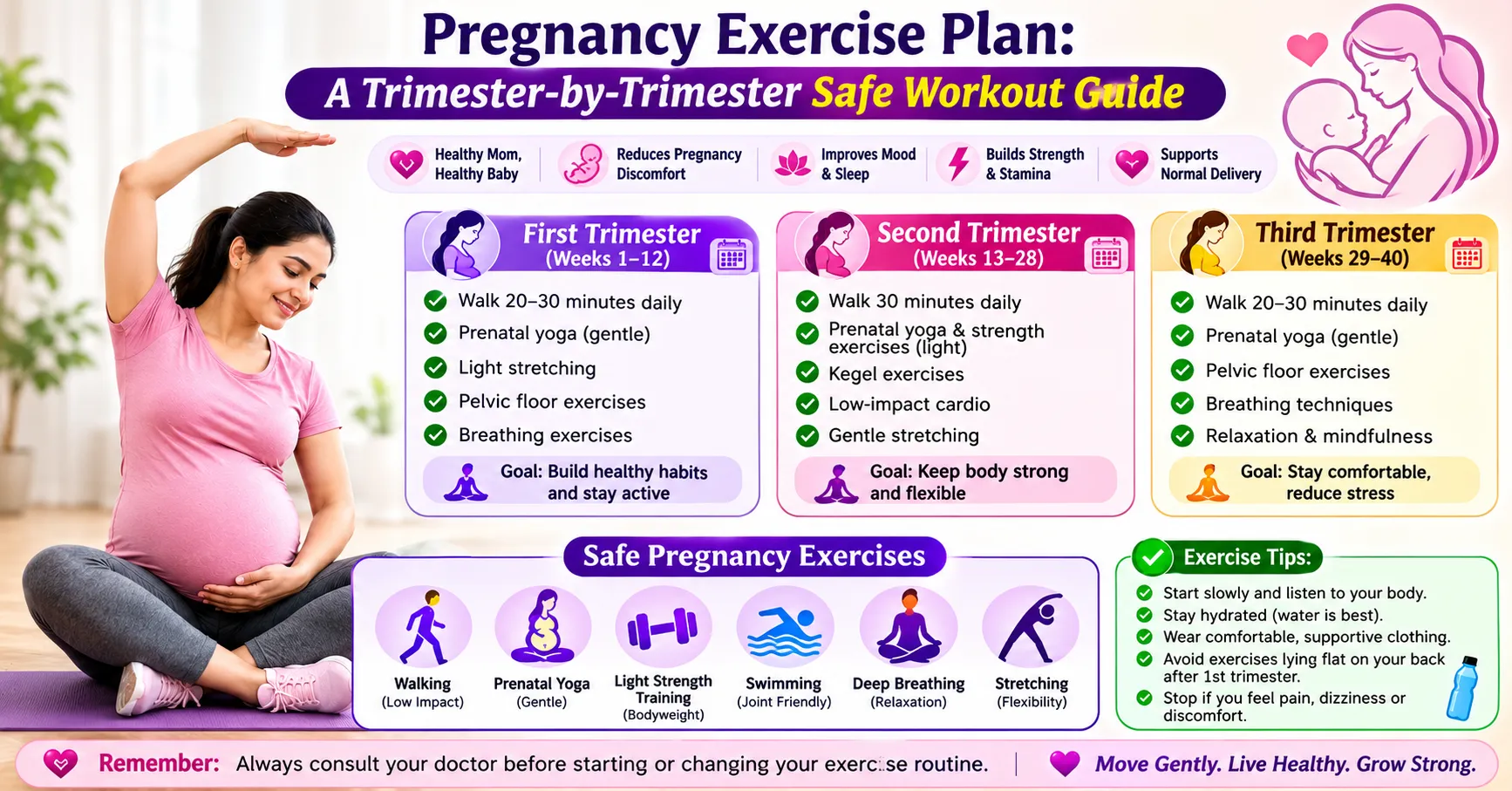
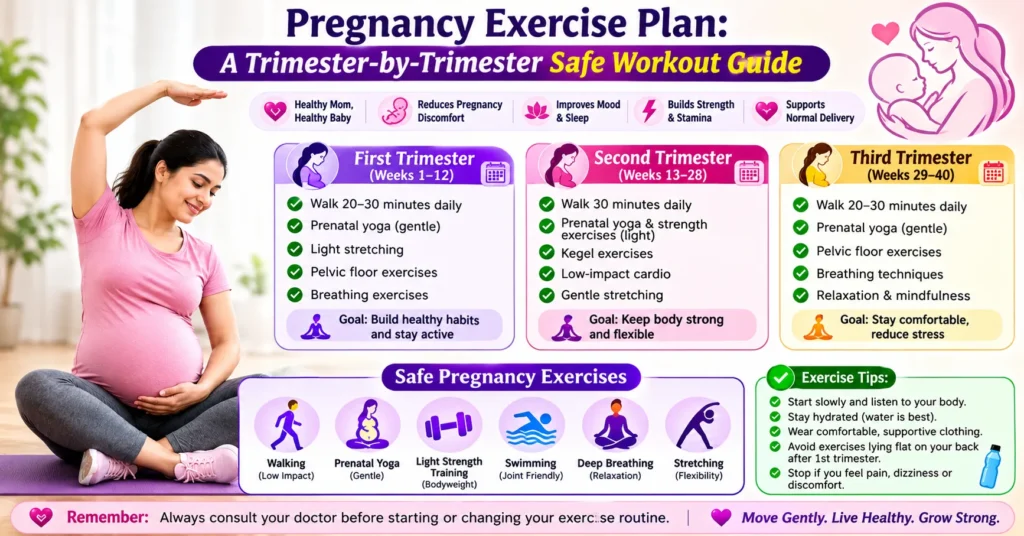
Staying active during pregnancy isn’t just safe for most women, it’s actually recommended. A good pregnancy exercise plan can ease back pain, improve sleep, boost mood, and even make labor and postpartum recovery smoother. But knowing what’s safe at each stage matters, since your body’s needs change dramatically from the first trimester to the third.
This guide breaks down a realistic, trimester-by-trimester pregnancy workout plan, along with what to avoid and warning signs to watch for.
Is It Safe to Exercise During Pregnancy?
For most healthy pregnancies, yes. The American College of Obstetricians and Gynecologists recommends at least 150 minutes of moderate exercise per week for pregnant women without complications. That said, always get clearance from your doctor first, especially if you have a history of miscarriage, preeclampsia, placenta issues, or other high-risk conditions.
First Trimester Exercise Plan (Weeks 1-12)
This trimester often comes with nausea, fatigue, and unpredictable energy. Listen to your body more than any fixed plan.
Safe activities:
- Brisk walking, 20-30 minutes most days
- Prenatal yoga (avoid deep twists and hot yoga)
- Swimming, gentle and low-impact on joints
- Light strength training with bodyweight or light dumbbells
What to avoid:
- Contact sports or activities with fall risk
- Overheating, especially hot yoga or intense cardio in heat
- Exercises lying flat on your back for long periods later in this trimester
Second Trimester Exercise Plan (Weeks 13-27)
Many women feel their best during this stage, energy returns and nausea usually fades. This is a great time to build a consistent routine.
Safe activities:
- Prenatal Pilates for core and pelvic floor strength
- Stationary cycling instead of outdoor cycling (balance shifts as belly grows)
- Modified strength training, focusing on posture and back support
- Walking or swimming, 30 minutes most days
What to avoid:
- Exercises that involve lying flat on your back after week 16-20 (can reduce blood flow)
- High-impact jumping or bouncing movements
- Any activity with a high fall risk (skiing, horseback riding, etc.)
Third Trimester Exercise Plan (Weeks 28-40)
Your center of gravity shifts significantly now. Focus shifts from intensity to maintaining mobility, comfort, and preparing your body for labor.
Safe activities:
- Prenatal yoga focused on hip opening and breathing techniques
- Pelvic floor and Kegel exercises to prepare for delivery
- Gentle walking, shorter but more frequent sessions
- Water aerobics, which reduces joint strain significantly
What to avoid:
- Any exercise causing dizziness, shortness of breath, or discomfort
- Deep squats or exercises that strain an already loosened pelvis
- Exercising in extreme heat or for long durations without breaks
Weekly Sample Pregnancy Workout Plan
- Monday: 30-minute walk + 10 minutes of stretching
- Tuesday: Prenatal yoga session
- Wednesday: Light strength training (arms, back, legs)
- Thursday: Swimming or water aerobics
- Friday: Rest or gentle stretching
- Saturday: 30-minute walk + pelvic floor exercises
- Sunday: Rest day
Adjust intensity and frequency based on how you feel each week, especially as trimesters progress.
Warning Signs to Stop Exercising Immediately
Stop and contact your doctor if you experience:
- Vaginal bleeding or fluid leakage
- Dizziness, chest pain, or severe shortness of breath
- Contractions or regular, painful uterine tightening
- Severe headache or calf pain/swelling
- Decreased fetal movement
Benefits of Staying Active Throughout Pregnancy
- Reduces risk of gestational diabetes
- Eases back pain and improves posture
- Improves sleep quality
- Supports easier labor and faster postpartum recovery
- Boosts mood and reduces pregnancy-related anxiety
Frequently Asked Questions (FAQs)
Can I start exercising if I wasn’t active before pregnancy?
Yes, but start slow. Begin with short walks and gentle stretching, gradually increasing duration and intensity as your body adjusts, always with your doctor’s approval.
Is it safe to lift weights during pregnancy?
Light to moderate strength training is generally safe, especially in the second trimester. Avoid heavy lifting, holding your breath while lifting, and exercises that strain the lower back.
Can exercise cause a miscarriage in early pregnancy?
Moderate exercise does not increase miscarriage risk in healthy pregnancies. However, high-intensity or contact sports carry higher risk and should be avoided or modified.
When should I stop doing abdominal exercises during pregnancy?
Avoid traditional crunches and exercises lying flat on your back after the first trimester, as they can strain the abdominal muscles and reduce blood flow. Switch to standing core exercises instead.
How many days a week should I exercise during pregnancy?
Most doctors recommend moderate exercise on most days of the week, totaling about 150 minutes weekly, spread across sessions rather than doing it all at once.
Can walking alone be enough exercise during pregnancy?
Yes, walking is one of the safest and most effective forms of pregnancy exercise. Combined with light stretching or prenatal yoga, it covers most fitness needs throughout pregnancy.
Is it normal to feel more tired after exercising during pregnancy?
Mild tiredness is normal, but exhaustion, dizziness, or needing extensive recovery time isn’t. If this happens, reduce intensity and consult your doctor.
Final Words
A consistent, well-paced pregnancy exercise plan supports both you and your baby through each trimester. Listen to your body, adjust as needed, and remember that consistency matters far more than intensity during this time.