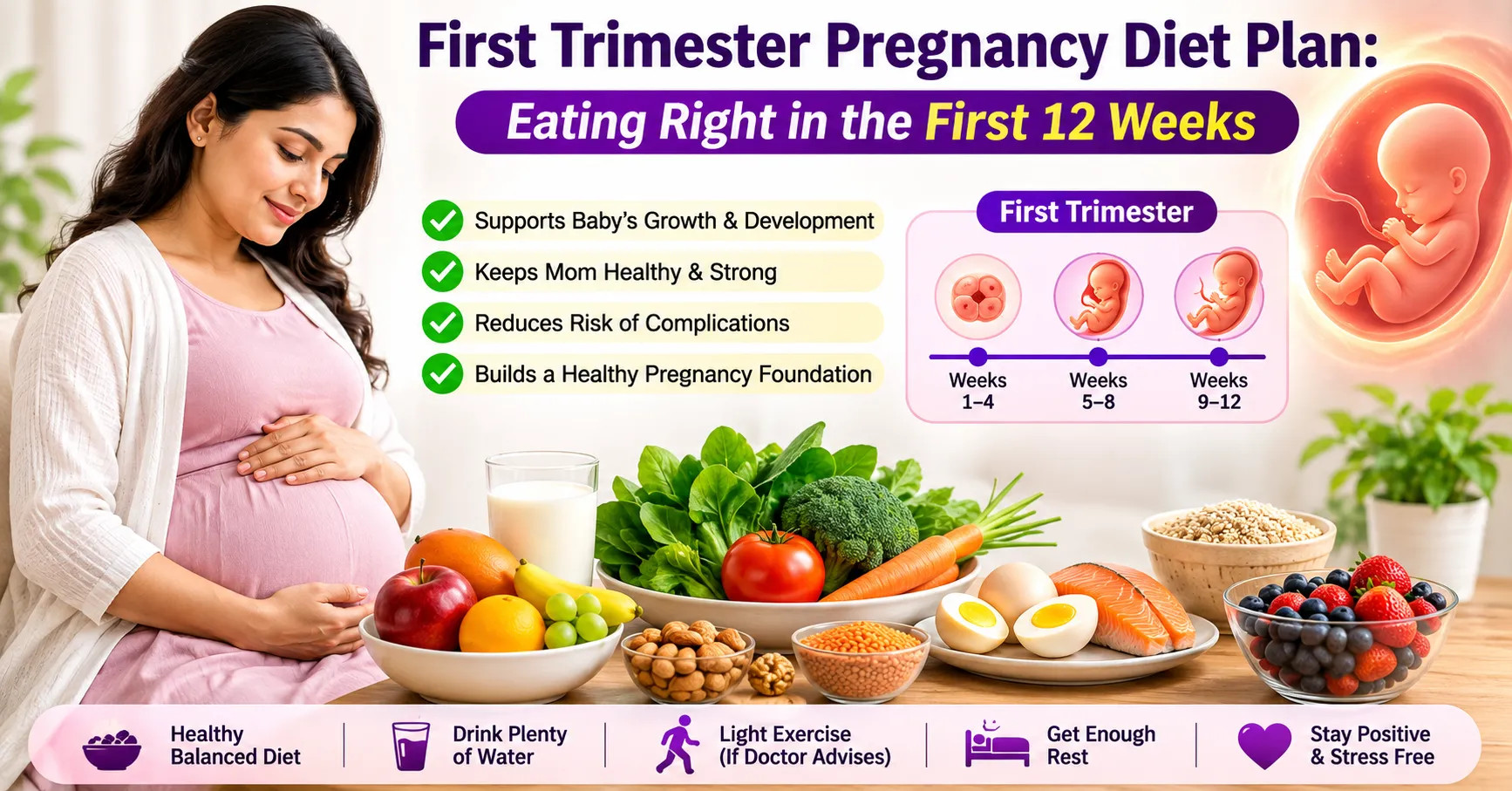
The first trimester is when your baby’s most critical development happens, major organs, the neural tube, and the foundation for brain development all form in these early weeks. Yet ironically, it’s also when many women struggle the most with eating well, thanks to nausea, food aversions, and exhaustion. This guide breaks down a realistic first trimester pregnancy diet plan that works with your body, not against it.
Why the First Trimester Diet Matters So Much
Weeks 1 through 12 are when the neural tube, heart, and other major organs begin forming. Nutrients like folic acid are especially critical during this window since neural tube defects typically occur before most women even know they’re pregnant. This is why doctors recommend starting folic acid before conception if possible.
Key Nutrients to Focus on in the First Trimester
1. Folic Acid
The single most important nutrient in early pregnancy. Aim for 400-600 mcg daily through a combination of diet and supplements. Found in leafy greens, lentils, oranges, and fortified cereals.
2. Vitamin B6
Helps reduce nausea and supports fetal brain development. Found in bananas, chickpeas, potatoes, and fortified cereals.
3. Iron
Supports increasing blood volume, even in early pregnancy. Found in spinach, lentils, dates, and lean meats.
4. Protein
Supports early tissue and placental development. Found in eggs, dal, paneer, yogurt, and lean meats.
5. Calcium and Vitamin D
Begin building the foundation for your baby’s bone development. Found in dairy, fortified plant milk, and sesame seeds.
Managing Morning Sickness While Eating Well
Nausea affects a majority of women in the first trimester, and it can make maintaining a balanced diet genuinely difficult. Here’s what helps:
- Eat small, frequent meals instead of three large ones, an empty stomach often worsens nausea
- Keep dry crackers or toast by your bedside to eat before getting up
- Ginger tea or ginger candies can help settle the stomach naturally
- Cold or room-temperature foods are often easier to tolerate than hot, strongly-smelling meals
- Stay hydrated with small sips throughout the day rather than large amounts at once
- Don’t force “ideal” foods if they trigger nausea, focus on whatever stays down, even if it’s not glamorous
Sample First Trimester Meal Plan
- Early morning: A few dry crackers or toast before getting out of bed
- Breakfast: Vegetable poha or oats with a boiled egg
- Mid-morning snack: A banana with a handful of almonds
- Lunch: Dal, roti or rice, a vegetable sabzi, and yogurt
- Evening snack: Ginger tea with roasted chana or fruit
- Dinner: Grilled chicken or paneer with a light vegetable curry and rice
- Before bed: A small glass of milk, if tolerated
Foods to Prioritize in the First Trimester
- Leafy greens – spinach, methi, for folate and iron
- Citrus fruits – oranges, help with iron absorption and provide vitamin C
- Whole grains – oats, brown rice, for sustained energy amid fatigue
- Eggs – complete protein plus choline, important for brain development
- Bananas – help with nausea and provide potassium
- Yogurt – probiotics plus calcium, gentle on the stomach
Foods to Avoid in the First Trimester
- Raw or undercooked eggs, meat, and fish – risk of infection during a critical development window
- Unpasteurized dairy and soft cheeses – listeria risk
- High-mercury fish – shark, swordfish, king mackerel
- Excess caffeine – limit to under 200 mg daily
- Alcohol – avoid entirely, no safe amount established
- Raw sprouts – higher bacterial contamination risk
- Excessive processed sugar – linked to increased gestational diabetes risk later in pregnancy
Dealing with Food Aversions
It’s extremely common to suddenly dislike foods you once loved, meat, eggs, and strong-smelling vegetables are common culprits. If this happens:
- Substitute with similar nutrient sources (if meat is unappealing, try dal or paneer for protein)
- Don’t force it, aversions typically ease by the second trimester
- Focus on covering nutrient categories rather than specific foods
Weight Gain Expectations in the First Trimester
Unlike later trimesters, minimal weight gain is expected in the first trimester, typically around 1-2 kg (2-4 lbs) total, or sometimes none at all if nausea limits eating. This is normal and not a cause for concern as long as you’re eating reasonably well overall.
Frequently Asked Questions (FAQs)
What should I eat in the first trimester if I have severe nausea?
Focus on small, bland, frequent meals, dry crackers, bananas, toast, and ginger tea are often well tolerated. Perfection isn’t the goal, just keeping something down consistently.
Is it necessary to take folic acid supplements if I eat leafy greens?
Yes, most doctors recommend a folic acid supplement even with a good diet, since it’s difficult to consistently get enough through food alone during this critical window.
Can I lose weight in the first trimester due to nausea?
Mild weight loss due to nausea in the first trimester is common and usually not harmful, as long as you’re staying hydrated and eating what you can tolerate. Inform your doctor if it’s significant.
What foods help reduce nausea in early pregnancy?
Ginger (tea, candies), bananas, dry crackers, and cold foods tend to be easier to tolerate. Avoiding an empty stomach and strong food smells also helps significantly.
Is it safe to skip meals if I don’t feel hungry in the first trimester?
It’s better to eat small amounts frequently rather than skipping meals entirely, since an empty stomach often worsens nausea and can affect blood sugar stability.
How much extra should I eat during the first trimester?
Contrary to common belief, no significant extra calories are needed in the first trimester. Focus on nutrient quality rather than eating for two in terms of quantity.
When do food aversions and nausea typically improve?
Most women see improvement by the end of the first trimester or early second trimester, around weeks 12-14, though this varies from person to person.
Final Words
The first trimester diet is less about perfection and more about doing your best with what your body can tolerate. Focus on folic acid, staying hydrated, and eating small consistent meals, and know that things typically get easier as you move into the second trimester.