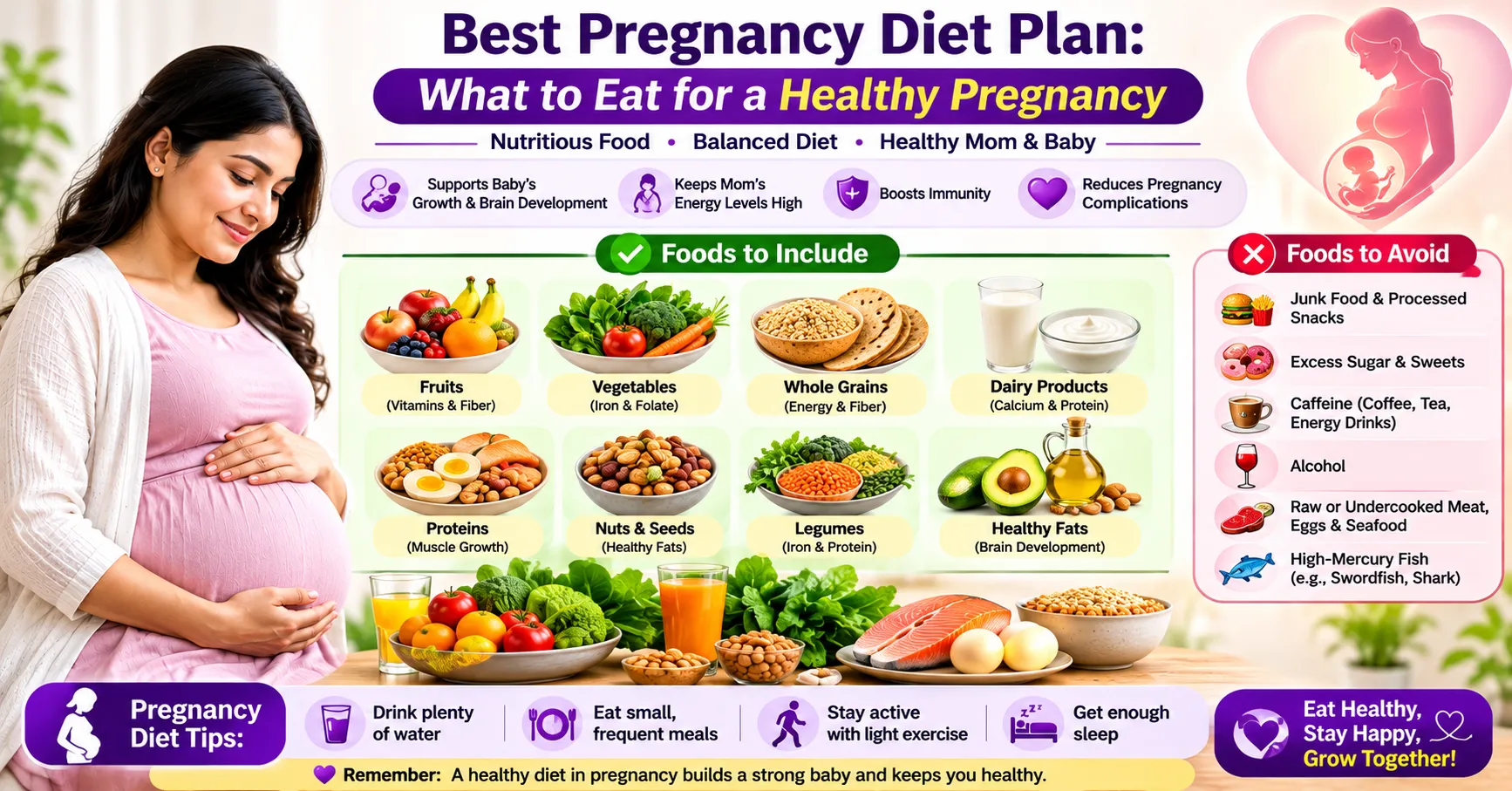
What you eat during pregnancy directly shapes your baby’s development and your own health throughout the journey. But with so much conflicting advice floating around, it’s easy to feel overwhelmed about what actually belongs on your plate. This guide lays out a practical, doctor-backed pregnancy diet plan covering essential nutrients, foods to prioritize, and what to limit or avoid.
Why Pregnancy Nutrition Matters So Much
Your baby relies entirely on you for nutrients, from brain development to bone growth. At the same time, your body needs extra fuel to support a growing uterus, increased blood volume, and eventually breastfeeding. A well-balanced pregnancy diet plan isn’t about eating for two in terms of quantity, it’s about eating smarter, not just more.
Key Nutrients Every Pregnancy Diet Plan Needs
1. Folic Acid (Folate)
Critical for preventing neural tube defects, especially in early pregnancy. Found in leafy greens, lentils, fortified cereals, and citrus fruits. Most doctors recommend a folic acid supplement of 400-600 mcg daily.
2. Iron
Supports increased blood volume and prevents pregnancy anemia. Found in red meat, spinach, lentils, and fortified grains. Pair iron-rich foods with vitamin C (like citrus or tomatoes) to improve absorption.
3. Calcium
Essential for your baby’s bone and teeth development. Found in dairy products, fortified plant milk, sesame seeds, and leafy greens. Aim for around 1000 mg daily.
4. Protein
Supports fetal tissue and muscle development. Found in eggs, dal, paneer, chicken, fish, and Greek yogurt. Needs increase to about 70-100 grams daily depending on trimester.
5. DHA (Omega-3 Fatty Acids)
Crucial for brain and eye development. Found in fatty fish (salmon, sardines), walnuts, flaxseeds, and DHA-fortified eggs.
6. Vitamin D
Supports calcium absorption and immune function. Found in fortified milk, egg yolks, and sunlight exposure. Many doctors recommend supplementation, especially in winter months.
Foods to Include in Your Pregnancy Diet Plan
- Whole grains – oats, brown rice, whole wheat, for sustained energy and fiber
- Lean proteins – eggs, chicken, fish, dal, paneer
- Dairy or fortified alternatives – milk, yogurt, cheese for calcium
- Fruits and vegetables – a variety of colors for different vitamins and antioxidants
- Nuts and seeds – almonds, walnuts, flaxseeds for healthy fats and micronutrients
- Healthy fats – ghee in moderation, olive oil, avocado
Foods and Items to Limit or Avoid During Pregnancy
- Raw or undercooked meat, eggs, and fish – risk of foodborne illness
- High-mercury fish – shark, swordfish, king mackerel
- Unpasteurized dairy and soft cheeses – risk of listeria
- Excess caffeine – limit to under 200 mg daily (roughly one cup of coffee)
- Alcohol – no safe amount established during pregnancy
- Raw sprouts and unwashed produce – risk of bacterial contamination
- Excessive processed and sugary foods – linked to gestational diabetes risk
Sample One-Day Pregnancy Meal Plan
- Breakfast: Vegetable poha or oats with a boiled egg and a glass of milk
- Mid-morning snack: A handful of almonds and an orange
- Lunch: Dal, brown rice or roti, a vegetable sabzi, and a bowl of curd
- Evening snack: Roasted chana or fruit chaat
- Dinner: Grilled fish or paneer with quinoa and sautéed greens
- Before bed: A warm glass of milk
Managing Common Pregnancy Diet Challenges
Morning sickness: Eat small, frequent meals instead of three large ones. Ginger tea and dry crackers can help settle nausea.
Constipation: Increase fiber intake through fruits, vegetables, and whole grains, along with adequate water intake.
Heartburn: Avoid spicy, fried, and heavy meals close to bedtime. Eating smaller portions more frequently often helps.
Food aversions: It’s okay to substitute foods with similar nutrient profiles if certain foods feel unappealing, just don’t skip the nutrient category entirely.
How Many Extra Calories Do You Actually Need?
Contrary to popular belief, you don’t need double the calories during pregnancy. Roughly:
- First trimester: No significant extra calories needed
- Second trimester: About 300-350 extra calories daily
- Third trimester: About 450-500 extra calories daily
The focus should be on nutrient quality, not just quantity.
Frequently Asked Questions (FAQs)
What is the best diet plan during pregnancy?
The best pregnancy diet includes a balance of protein, whole grains, healthy fats, fruits, vegetables, and key nutrients like folic acid, iron, calcium, and DHA, tailored to each trimester’s needs.
Can I eat outside food occasionally during pregnancy?
Occasional outside food is generally fine if it’s freshly cooked and hygienic. Avoid raw, undercooked, or street food with questionable hygiene standards to reduce infection risk.
Is it necessary to take prenatal vitamins if I eat a balanced diet?
Yes, most doctors still recommend prenatal vitamins since it’s difficult to get enough folic acid, iron, and DHA from diet alone, especially in early pregnancy.
How much weight should I gain during pregnancy?
This varies by pre-pregnancy BMI, but generally ranges from 11-16 kg (25-35 lbs) for women with a normal BMI. Your doctor can guide you based on your specific situation.
Can I follow a vegetarian diet plan during pregnancy?
Yes, a well-planned vegetarian diet can meet all pregnancy nutritional needs. Focus on combining dal, paneer, dairy, nuts, and fortified foods to cover protein, iron, and B12 requirements.
What foods help with pregnancy fatigue?
Iron-rich foods (spinach, lentils, dates), complex carbs (oats, whole grains), and staying well hydrated all help combat pregnancy fatigue more effectively than sugary quick fixes.
Is it safe to have cheat meals occasionally during pregnancy?
Yes, occasional treats are fine in moderation. The key is consistency in overall eating habits, not perfection in every single meal.
Final Words
A well-planned pregnancy diet doesn’t need to be complicated or restrictive. Focus on variety, nutrient density, and listening to your body’s changing needs through each trimester, and you’ll be giving your baby the best possible start.