
If you’re pregnant and haven’t ordered your breast pump yet, here’s good news: in most cases, you don’t have to pay for one at all. Thanks to a federal mandate, most health insurance plans are required to cover a breast pump with no copay. Here’s exactly how the benefit works, how to claim it, and what to do if your insurer pushes back.
Is a Breast Pump Covered by Insurance?
Yes — for most people. <cite index=”14-1″>Section 2713 of the Affordable Care Act requires all non-grandfathered health plans to cover preventive health services for women without any cost sharing, and breastfeeding equipment, including breast pumps, is explicitly listed as one of these covered services</cite>. In plain terms: <cite index=”14-1″>no copay, no deductible, no coinsurance — zero dollars out of pocket</cite> for a medically necessary pump.
<cite index=”9-1″>This typically means a brand-new double electric pump provided at no cost</cite>, though the exact model and options vary by insurer.
Who Might Not Be Covered
Not every plan is required to include this benefit. <cite index=”14-1″>Short-term health plans, health sharing ministries, and certain grandfathered employer plans may not cover breast pumps</cite>. If you’re unsure whether your plan qualifies, call your insurer and specifically ask whether your plan is ACA-compliant and includes the breastfeeding equipment benefit.
Medicaid and TRICARE: <cite index=”14-1″>Most state Medicaid programs cover breast pumps as part of prenatal and postpartum benefits, though coverage details vary by state. TRICARE also covers breast pumps and breastfeeding support services for military families</cite>.
Which Insurance Companies Cover Breast Pumps?
<cite index=”9-1″>Major insurers including Aetna, United Healthcare, Anthem Blue Cross Blue Shield, and Cigna typically offer full breast pump coverage through approved suppliers</cite>. Coverage specifics — like which pump models qualify for full coverage versus which require an upgrade fee — vary by plan, so it’s worth checking your specific benefits before ordering.
How to Actually Get Your Free Breast Pump
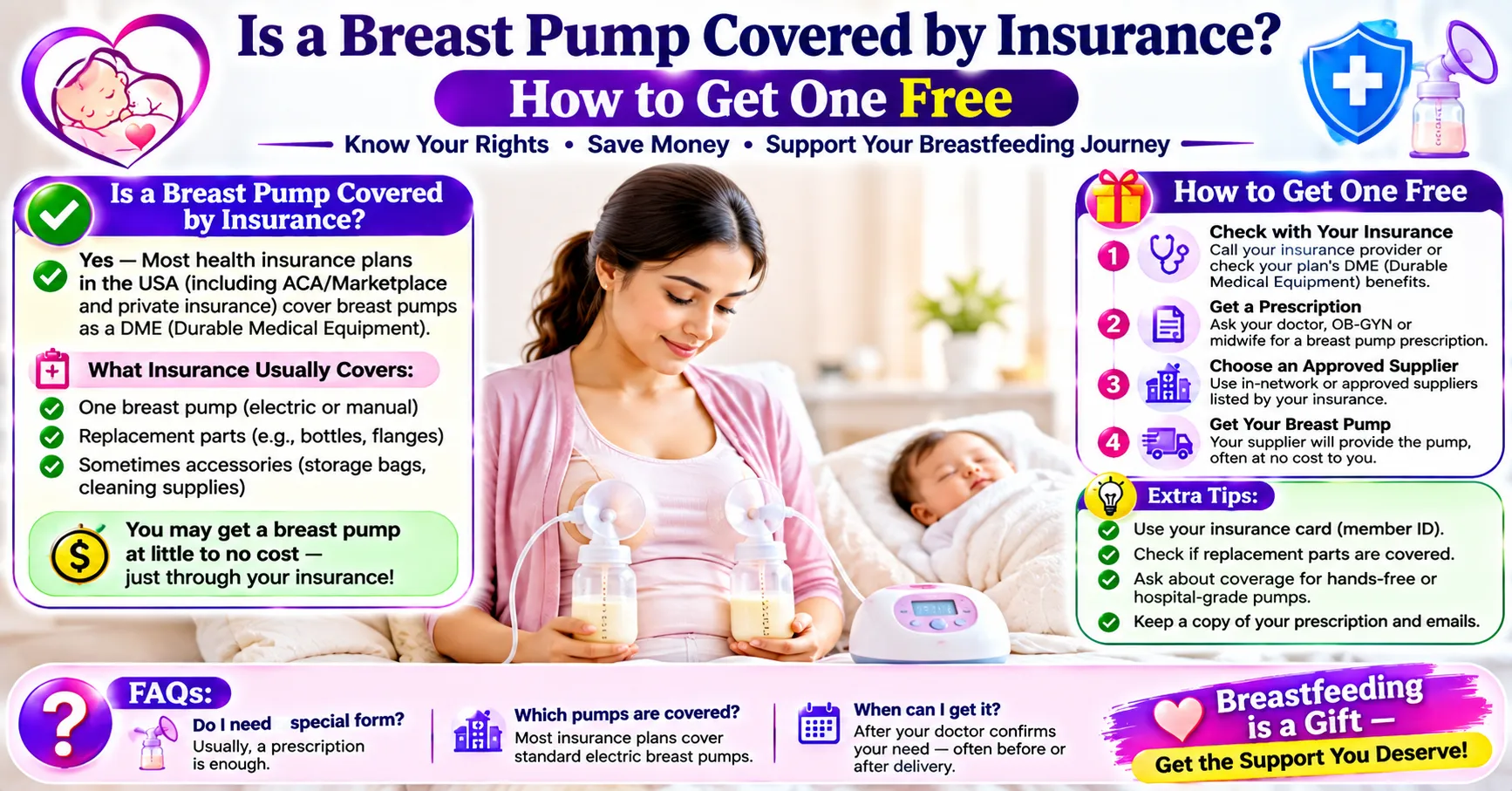
Step 1: Check your coverage. Call your insurer directly, or start through a DME (durable medical equipment) supplier, which handles most of the paperwork on your behalf. <cite index=”9-1″>Popular suppliers include Aeroflow Breastpumps, Babylist Health, 1 Natural Way, and Edgepark</cite>.
Step 2: Get a prescription. <cite index=”13-1″>Most plans require a prescription or provider order to process the claim</cite>. <cite index=”10-1″>A simple prescription from your OB-GYN, midwife, or primary care doctor stating “breast pump, electric” is usually sufficient</cite>.
Step 3: Submit through your supplier. DME suppliers typically verify your insurance eligibility and handle the claim directly, so you’re not stuck on hold with your insurance company.
Step 4: Receive your pump. <cite index=”9-1″>Most suppliers ship the pump with free shipping closer to your due date, at zero out-of-pocket cost in most cases</cite>.
When to Order Your Breast Pump
Timing matters more than most parents realize. <cite index=”10-1″>Most insurance plans allow you to order and receive your pump 30 to 60 days before your due date</cite>, though <cite index=”9-1″>some plans allow ordering anywhere from 6 months before to 6 months after birth</cite>. Ordering during your third trimester is generally the sweet spot — early enough to avoid delays, but close enough that the pump arrives when you actually need it.
<cite index=”9-1″>Most plans cover one pump per pregnancy</cite>, and <cite index=”10-1″>coverage renews with each new pregnancy</cite>, so you’re eligible for a new free pump with each child.
What Else Insurance May Cover
Breast pump coverage often extends beyond just the pump itself. <cite index=”9-1″>Many insurers also cover up to $2,000 in additional breastfeeding essentials — replacement parts, flanges, storage bags, and even lactation consultant visits</cite>. This is easy to miss since most people only ask about the pump itself and never find out about the extra benefits.
What If Your Insurance Says It’s Not Covered?
<cite index=”10-1″>If your plan is ACA-compliant, breast pumps should be covered. If a representative initially says otherwise, ask them to check specifically under preventive services for women, and request to speak with a supervisor if the denial continues</cite>. Having the ACA Section 2713 requirement noted when you call can help move the conversation along faster.
Bottom Line
If you have a standard, ACA-compliant health plan, you’re very likely entitled to a free breast pump through insurance — no copay, no deductible. The process is usually easier through a DME supplier than by calling your insurance company directly, and ordering during your third trimester gives you the best timing. Don’t skip checking for additional covered supplies either — lactation support and pump accessories are often part of the same benefit and go unclaimed simply because parents don’t know to ask.
FAQs
Does insurance really cover a breast pump for free?
Yes, for most ACA-compliant plans. The Affordable Care Act requires coverage of a breast pump with no copay, deductible, or coinsurance as a preventive care benefit.
How do I get a breast pump through insurance?
Check your coverage with your insurer or a DME supplier, get a prescription from your doctor, submit it through an approved supplier, and the pump typically ships free before your due date.
What insurance companies cover breast pumps?
Most major insurers, including Aetna, United Healthcare, Anthem Blue Cross Blue Shield, and Cigna, cover breast pumps, though the exact process and approved models vary by plan.
When should I order my breast pump through insurance?
Most plans allow ordering 30 to 60 days before your due date, with some allowing orders up to 6 months before birth. Third trimester is generally the ideal time.
Does Medicaid cover breast pumps?
In most states, yes, since Medicaid must cover ACA preventive services, but exact coverage and approved suppliers vary by state Medicaid program.
Can I get more than one breast pump covered by insurance?
Most plans cover one pump per pregnancy, but coverage renews with each new pregnancy, so you’re generally eligible for a new pump each time.