
More families are choosing home birth every year, but insurance coverage for it is one of the most confusing parts of planning one. Unlike hospital deliveries, home births fall into a gray area for a lot of insurance plans — some cover it fully, some partially, and some not at all. Here’s what actually determines whether you’re covered.
Does Insurance Cover Home Birth?
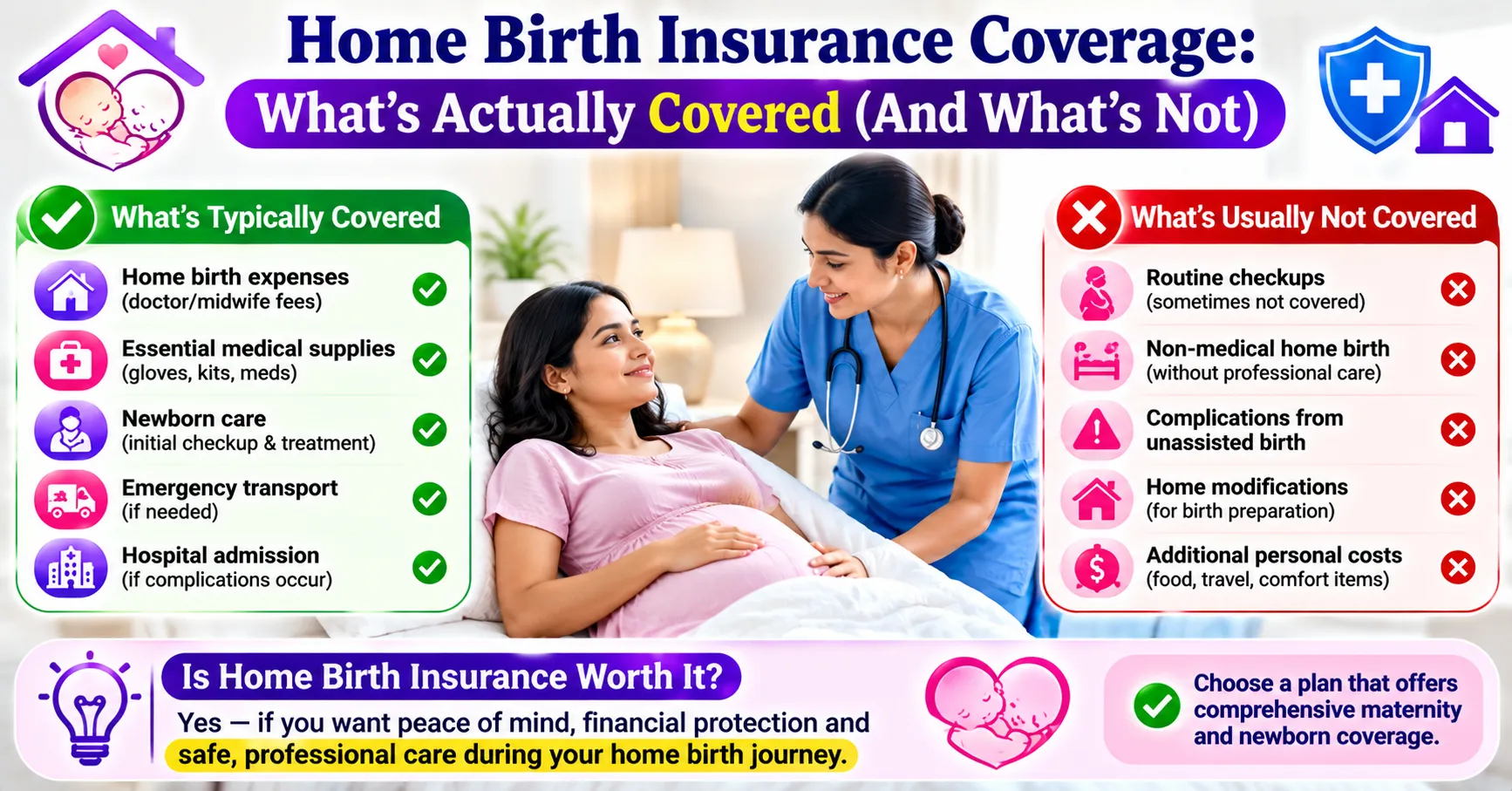
The honest answer: it depends entirely on your specific plan, your state, and who’s attending the birth. There’s no universal rule the way there is for hospital deliveries. Coverage generally falls into three categories:
- Full coverage — plan treats home birth the same as any other delivery, covering midwife fees, supplies, and any necessary transfers
- Partial coverage — plan covers prenatal visits and postpartum care but not the birth itself, or covers only a portion of midwife fees
- No coverage — plan explicitly excludes home birth, meaning you’d pay entirely out of pocket unless a medical transfer to a hospital occurs
What Determines Your Coverage
A few factors decide which category you fall into:
Your insurance provider and plan type. Some major insurers have specific riders or policies for home birth, while others simply don’t address it, which usually defaults to non-coverage unless you push for a case-by-case review.
Your state. Some states require insurers to cover licensed midwife services regardless of birth setting, while others leave it entirely up to the individual plan. Medicaid coverage for home birth also varies significantly by state.
Who’s attending the birth. This is often the deciding factor. Insurance is far more likely to cover a birth attended by a Certified Nurse-Midwife (CNM) than one attended by a Certified Professional Midwife (CPM), since CNMs are more broadly recognized and often billable the same way as other medical providers. CPM-attended births are covered less consistently, especially outside states that specifically license and recognize CPMs.
Whether the birth is “low-risk.” Most plans that do cover home birth require it to be classified as low-risk from the start, with a documented care plan and a licensed provider.
Home Birth Costs Without Insurance
If your plan doesn’t cover home birth, or only partially covers it, here’s what you’re likely paying out of pocket:
| Service | Average Cost |
|---|---|
| Midwife fee (full care package) | $2,000–$5,000 |
| Birth supplies/kit | $100–$300 |
| Placenta encapsulation (optional) | $150–$300 |
| Doula (optional, separate from midwife) | $800–$2,500 |
| Emergency hospital transfer (if needed) | Billed separately, hospital rates apply |
Compared to the average cost of a hospital delivery — which can run into the tens of thousands before insurance, even more with a C-section — home birth is often significantly cheaper even when paid fully out of pocket.
What About Emergency Transfers?
This is one of the most important things to confirm before your due date: what happens if you need to transfer to a hospital mid-labor? Even in a well-planned home birth, roughly 10–15% of first-time mothers end up transferring for various reasons — prolonged labor, fetal distress, or the need for pain management beyond what’s available at home.
The good news: emergency transfers are typically covered under your regular health insurance as a standard hospital admission, separate from whatever home birth-specific coverage you do or don’t have. It’s worth confirming this directly with your insurer so you’re not caught off guard mid-labor.
How to Actually Check Your Coverage
Don’t rely on guesswork or what your midwife’s office assumes. Take these steps directly:
- Call your insurer and ask specifically — “Is home birth covered under my plan, and does that include midwife fees?”
- Ask about provider type — confirm whether CNM vs CPM changes your coverage
- Get it in writing — a verbal “yes” from a phone rep isn’t always reliable; request written pre-authorization if your plan allows it
- Ask your midwife about their billing experience — many midwives have dealt with your specific insurer before and know what typically gets approved or denied
Does Maternity Insurance Cover Home Birth?
If you’re shopping for a maternity insurance policy specifically because you’re planning a home birth, ask about this explicitly before enrolling — it’s not a given even in otherwise solid maternity plans. Some maternity insurance plans with no waiting period are also more likely to exclude home birth entirely, since they’re often designed around standard hospital delivery costs.
Bottom Line
Home birth insurance coverage isn’t standardized, so the only reliable way to know where you stand is to call your insurer directly and get specifics in writing — provider type, birth classification, and transfer coverage all matter. If your plan doesn’t cover it, the out-of-pocket cost is often still lower than a hospital birth, but it’s better to know that going in than to be surprised by a bill after the fact.
FAQs
Does health insurance typically cover home birth?
It varies significantly by plan and provider. Some fully cover it, especially with a Certified Nurse-Midwife, while others exclude it entirely or only cover prenatal and postpartum visits.
Is a midwife-attended home birth covered the same as a hospital birth?
Not always. Coverage often depends on whether the midwife is a Certified Nurse-Midwife (more commonly covered) or a Certified Professional Midwife (covered less consistently).
What happens if I need to transfer to a hospital during a home birth?
Emergency transfers are typically covered under your standard health insurance as a regular hospital admission, separate from home birth-specific coverage.
How much does a home birth cost without insurance?
Midwife fees typically range from $2,000 to $5,000, plus optional costs like a doula or placenta encapsulation, generally making it cheaper than an uninsured hospital birth.
How do I find out if my insurance covers home birth?
Call your insurer directly and ask specifically about home birth coverage, provider type requirements, and get any approval in writing before your due date.
Does Medicaid cover home birth?
It depends on the state. Some states cover licensed midwife services for home birth under Medicaid, while others don’t, so coverage should be confirmed locally.