
Breast cancer is most treatable when it’s caught early, and in many cases, the first clue comes not from a mammogram but from a change a person notices in their own body. Unfortunately, early symptoms are often subtle, painless, and easy to dismiss — which is exactly why so many cases go unnoticed until later stages.
In this guide, we’ll cover the most common early warning signs of breast cancer, how symptoms can vary depending on the type of breast cancer, how to perform a proper self-exam, and when it’s time to see a doctor.
The Most Common Early Symptoms of Breast Cancer
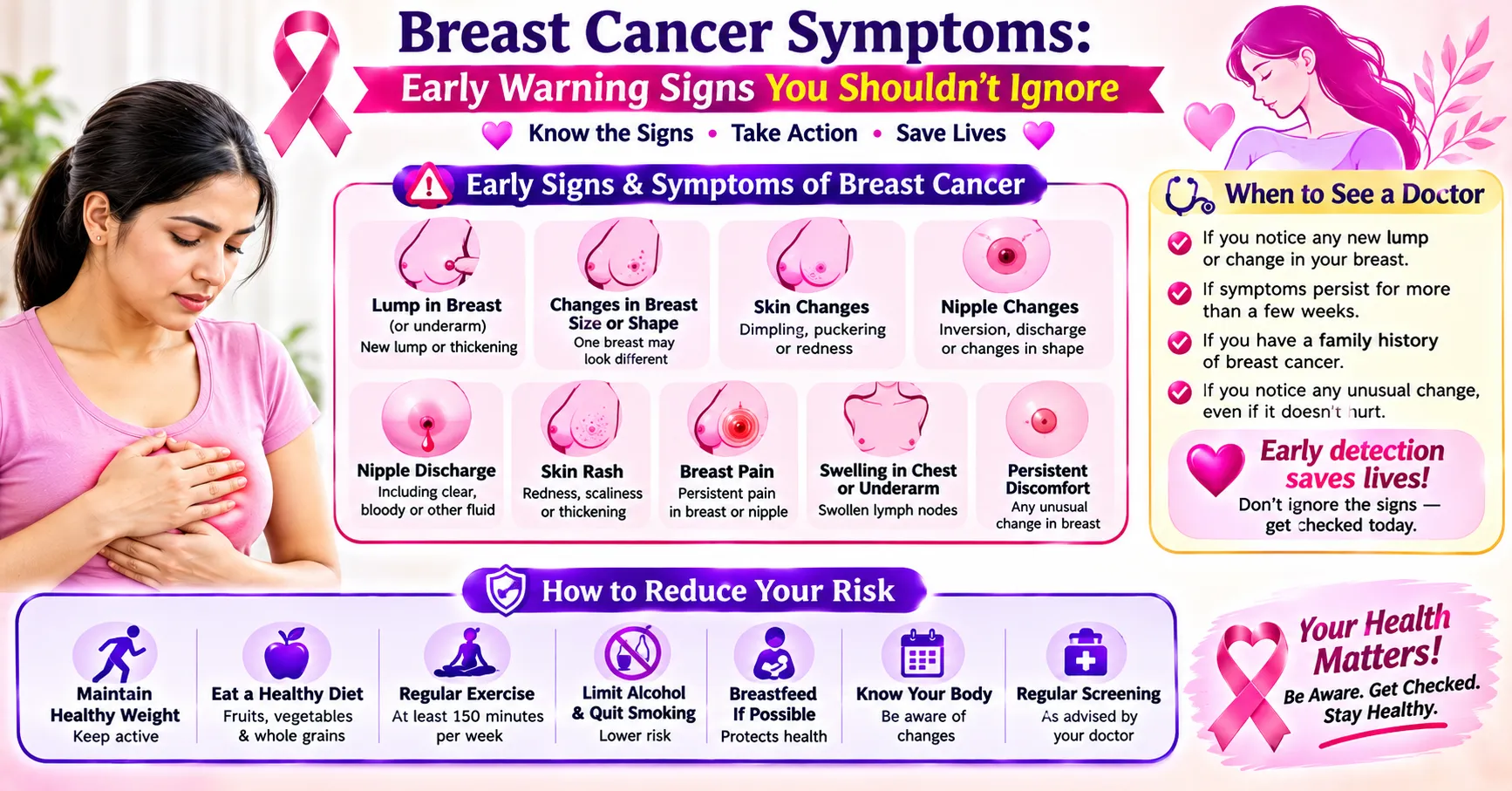
1. A New Lump or Mass
The most well-known symptom is a lump in the breast or underarm area. Cancerous lumps are often — but not always — hard, painless, and have irregular edges, unlike benign lumps which tend to be soft, movable, and tender.
2. Swelling of All or Part of the Breast
Even without a distinct lump, swelling that changes the size or shape of the breast can be an early sign, particularly with inflammatory breast cancer.
3. Skin Dimpling or Puckering
Sometimes described as looking like an orange peel (peau d’orange), dimpled or puckered skin can indicate that a tumor is pulling on connective tissue beneath the skin.
4. Breast or Nipple Pain
While most breast cancers are painless in early stages, persistent pain that doesn’t go away with your menstrual cycle is worth having checked.
5. Nipple Retraction
A nipple that suddenly turns inward or becomes flattened, when it wasn’t like that before, can be a warning sign.
6. Nipple Discharge
Any discharge other than breast milk — especially if it’s bloody, clear, or occurs without squeezing — should be evaluated by a doctor.
7. Redness or Thickening of the Skin
Skin that appears red, warm, thickened, or scaly (especially around the nipple) can point to inflammatory breast cancer or Paget’s disease of the breast.
8. Swollen Lymph Nodes
Swelling or a lump under the arm or near the collarbone can sometimes appear before a breast lump is even noticeable, since cancer can spread to lymph nodes early.
How Symptoms Differ by Breast Cancer Type
Not all breast cancer types present the same way:
- Invasive Ductal Carcinoma (IDC): Typically presents as a distinct, hard lump.
- Invasive Lobular Carcinoma (ILC): Often causes a subtle thickening or area of fullness rather than a clear lump, making it easy to miss.
- Inflammatory Breast Cancer (IBC): Rarely causes a lump at all — instead it causes redness, swelling, and skin that looks and feels like an orange peel, often mistaken for a breast infection (mastitis).
- Paget’s Disease of the Breast: Causes eczema-like changes on the nipple, including flaking, itching, and discharge.
For a full breakdown of how each subtype behaves, see our guide on breast cancer types.
Symptoms That Are Often Missed or Misread
Many people delay seeking care because early symptoms mimic common, benign conditions:
- Mistaking inflammatory breast cancer for a skin infection or mastitis
- Dismissing nipple discharge as a hormonal or breastfeeding-related issue
- Assuming a lump is a harmless cyst without getting it checked
- Ignoring persistent back or bone pain, which can be a sign of advanced or metastatic disease
- Attributing fatigue and unexplained weight loss to stress rather than investigating further
If any symptom persists for more than two weeks, it’s worth getting professionally evaluated rather than waiting to see if it resolves on its own.
How to Perform a Breast Self-Exam
While self-exams are not a replacement for mammograms, they help you become familiar with what’s normal for your body, making it easier to notice changes early.
Step-by-step:
- Visual check: Stand in front of a mirror with your arms at your sides, then raised overhead. Look for changes in size, shape, skin texture, or nipple position.
- Manual check lying down: Use the pads of your three middle fingers to check the entire breast and armpit area in a circular pattern, using light, medium, and firm pressure.
- Manual check standing or in the shower: Repeat the same circular motion check while standing, which many people find easiest when skin is wet and slippery.
- Check for discharge: Gently squeeze the nipple to check for any unusual discharge.
Perform a self-exam once a month, ideally a few days after your period ends when breasts are least tender and swollen.
Risk Factors That Increase Your Chances of Developing Breast Cancer
- Age: Risk increases significantly after age 50.
- Family history: Having a first-degree relative with breast cancer roughly doubles your risk.
- BRCA1 and BRCA2 gene mutations: These inherited mutations significantly raise lifetime risk and are often tested for via genetic screening.
- Dense breast tissue: Makes mammograms harder to read and is itself an independent risk factor.
- Early menstruation or late menopause: Longer lifetime exposure to estrogen slightly increases risk.
- Hormone replacement therapy: Long-term use of certain hormone therapies has been linked to increased risk.
- Obesity and alcohol consumption: Both are associated with a higher risk, particularly after menopause.
When Should You See a Doctor?
You should schedule an appointment promptly if you notice:
- A new lump that doesn’t go away after a full menstrual cycle
- Skin changes such as dimpling, redness, or an orange-peel texture
- Nipple discharge that isn’t breast milk
- A nipple that suddenly inverts or changes shape
- Persistent, localized pain in the breast or underarm
Even if a symptom turns out to be benign, getting it checked provides peace of mind and rules out anything serious.
Frequently Asked Questions (FAQs)
Is breast cancer always painful?
No. Most early-stage breast cancers are painless, which is why regular self-exams and screenings are so important for catching it before symptoms become obvious.
Can breast cancer symptoms come and go?
Some symptoms, like tenderness or lumpiness linked to your menstrual cycle, can fluctuate, but a persistent lump or skin change that doesn’t resolve after a cycle should always be evaluated.
What does a cancerous lump feel like compared to a normal lump?
Cancerous lumps are often hard, painless, and have irregular, immovable edges, while benign lumps tend to be soft, round, and movable — though only a medical evaluation can confirm which type you have.
Can men experience breast cancer symptoms?
Yes. Men can develop breast cancer and may notice a lump, nipple discharge, or skin changes, though it’s far less common than in women.
How often should I get a mammogram if I have no symptoms?
Most guidelines recommend annual or biennial mammograms starting between ages 40–50, though those with higher risk factors like BRCA mutations may need to start earlier and more frequently.
Is nipple discharge always a sign of breast cancer?
No, nipple discharge is often caused by benign conditions like hormonal changes or duct ectasia, but any unexplained or bloody discharge should still be evaluated by a doctor.
Can a mammogram miss breast cancer symptoms?
Yes, particularly in people with dense breast tissue or with subtypes like invasive lobular carcinoma, which is why some doctors recommend supplemental MRI or ultrasound screening for higher-risk patients.
What is the “orange peel” skin symptom?
It refers to skin that becomes pitted and dimpled, resembling the texture of an orange peel, and is a hallmark symptom of inflammatory breast cancer that requires immediate medical attention.
Conclusion
Recognizing the early symptoms of breast cancer — from a new lump to subtle skin or nipple changes — can make a life-saving difference in how early it’s caught and how effectively it can be treated. While not every symptom means cancer, persistent or unusual changes should never be ignored. Combining monthly self-exams with regular screening mammograms remains one of the most effective ways to catch breast cancer at its most treatable stage. Once a diagnosis is confirmed, understanding your treatment options is the next critical step.